
What Should Buyers Expect From a Tactical Flashlight Manufacturer?
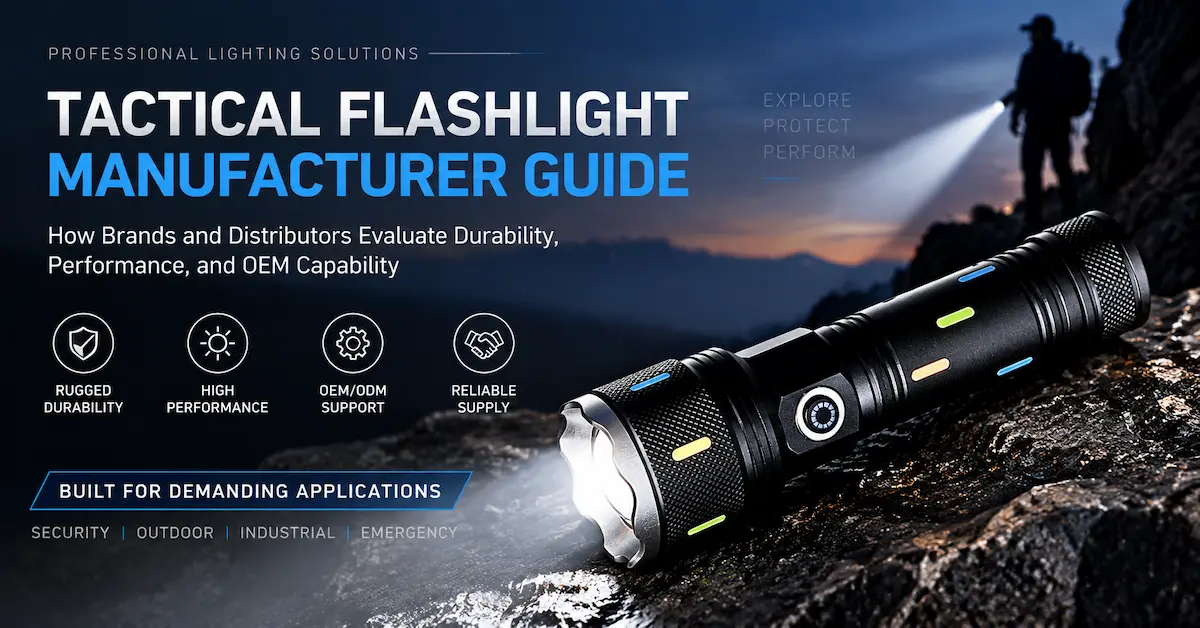
A professional tactical flashlight manufacturer should provide more than a high-output flashlight with a rugged appearance. For security equipment companies, outdoor brands, distributors, wholesalers, and private-label businesses, tactical flashlight sourcing is a product-development decision that involves performance requirements, manufacturing consistency, quality control, customization capability, and long-term supply stability.
Unlike ordinary consumer flashlights, tactical flashlights are usually selected for demanding applications where reliability matters. Buyers need to evaluate how the flashlight performs during extended operation, how the beam supports the intended task, how the housing protects internal components, how the battery system performs, and whether the manufacturer can maintain the same product specification after repeated production cycles.
A capable manufacturer should help buyers transform application requirements into a controlled product solution. This includes product selection, engineering communication, sample confirmation, production management, inspection standards, packaging control, and future repeat-order support.
GHS focuses on flashlight product development and manufacturing solutions for global customers. Buyers can review the company's About Us page to understand its manufacturing background, production capabilities, and product development approach.
Who Needs a Tactical Flashlight Manufacturer?
A tactical flashlight manufacturer is usually selected by companies that need professional lighting products rather than one-time consumer purchases.
Security Equipment Distributors
Security-related businesses often require flashlights designed for:
- Patrol operations
- Emergency response
- Professional security teams
- Law enforcement equipment supply
These buyers usually evaluate:
- Reliable switching
- Strong housing
- Long runtime
- Consistent production quality
- Stable supply availability
For distributors, the challenge is not only finding a functional flashlight but finding a supplier that can maintain product consistency across future orders.
Outdoor Equipment Brands
Outdoor brands may need tactical flashlight products for:
- Camping
- Hiking
- Adventure equipment
- Survival products
- Emergency kits
Their purchasing requirements often include:
- Rechargeable battery systems
- Waterproof structure
- Compact design
- Multiple lighting modes
- Retail-ready packaging
Outdoor brands also frequently require OEM support to create products that match their own market positioning.
Industrial Product Suppliers
Industrial suppliers may source tactical-style flashlights for:
- Equipment inspection
- Maintenance operations
- Workshop applications
- Field service teams
These buyers usually prioritize durability, reliable operation, and practical lighting performance rather than appearance alone.
Private Label Brands
Private-label buyers typically require more than standard products. They may need:
- Custom logo
- Packaging design
- Product differentiation
- Accessories
- Market-specific configurations
For these projects, choosing a manufacturer with OEM/ODM experience can reduce communication and development risks.
GHS provides multiple flashlight product platforms through its flashlight products page, allowing buyers to evaluate existing solutions before deciding whether further customization is required.
How Is a Tactical Flashlight Different From a Standard Flashlight?
The word “tactical” should not be evaluated only from product appearance. A professional tactical flashlight should be considered according to its intended application, operating environment, and performance requirements.
Beam Performance
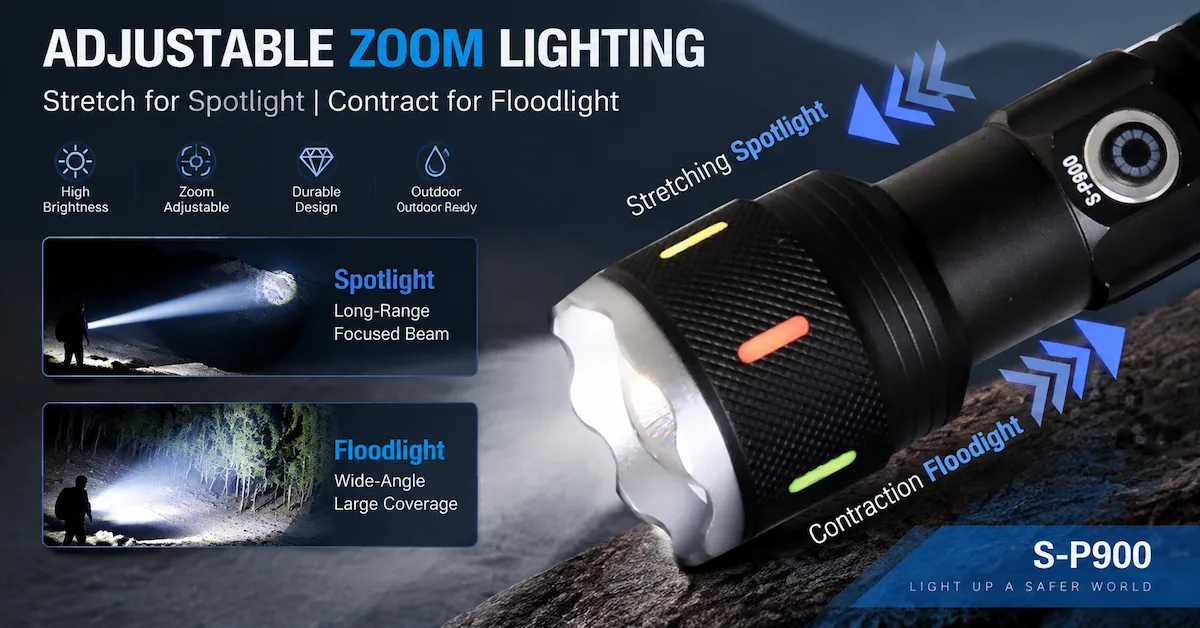
Beam design is one of the most important differences between professional and general flashlights.
Buyers should evaluate:
- Beam distance
- Beam concentration
- Flood coverage
- Light distribution
- Output stability
A long-distance beam may be suitable for outdoor searching, while a wider beam may work better for inspection and close-range tasks.
Operational Reliability
Professional users often require:
- Quick activation
- Stable switch operation
- Easy handling
- Predictable lighting modes
A flashlight that looks powerful but is difficult to operate under real conditions may not meet professional requirements.
Durability Requirements
Tactical applications often expose products to:
- Drops
- Outdoor weather
- Dust
- Repeated handling
- Long working periods
Therefore, housing structure, sealing design, and component protection are important evaluation factors.
Start With Application Requirements Before Choosing a Tactical Flashlight
One common mistake in tactical flashlight sourcing is starting with specifications such as maximum lumens before understanding the actual application.
A professional buyer should first define:
| Requirement | Buyer Consideration |
|---|---|
| Application | Security, outdoor, industrial, emergency |
| User group | Professional teams or retail customers |
| Operating environment | Indoor, outdoor, harsh conditions |
| Runtime | Required working duration |
| Beam type | Long-range, wide-area, adjustable |
| Battery | Rechargeable or replaceable battery |
| Charging | Type-C or other charging method |
| Size | Portability and handling requirements |
| Customization | Branding and packaging needs |
This information allows a tactical flashlight manufacturer to recommend the correct platform instead of simply offering the brightest available product.
Buyers evaluating high-output products can also review the high power flashlight guide to understand how brightness, beam design, and thermal management affect product performance.
Technical Factors to Evaluate Before Selecting a Tactical Flashlight Manufacturer
A tactical flashlight is a complete system consisting of multiple components. A reliable supplier should understand how these components influence performance.
| Component | Evaluation Focus |
|---|---|
| LED | Brightness, efficiency, consistency |
| Driver | Output control and stability |
| Battery | Runtime, safety, capacity |
| Charging system | Convenience and reliability |
| Lens and reflector | Beam quality |
| Housing | Strength and heat dissipation |
| Switch | Operation reliability |
| Sealing structure | Environmental protection |
LED and Driver System
The LED determines the light source, while the driver controls how power is delivered.
A professional buyer should understand:
- Expected output
- Working modes
- Regulation method
- Heat behavior
Battery and Power Management
For rechargeable tactical flashlights, battery performance affects:
- Runtime
- Charging frequency
- User experience
- Logistics requirements
Buyers should confirm the exact battery configuration used in approved samples and avoid uncontrolled substitutions during production.
The rechargeable flashlight manufacturer guide provides additional information about battery, charging, and runtime evaluation.
Materials and Manufacturing Process Behind Reliable Tactical Flashlights
A professional tactical flashlight manufacturer should have control over both materials and production processes.
Aluminum Alloy Housing
Many professional flashlights use aluminum alloy because it provides:
- Lightweight structure
- Mechanical strength
- Heat dissipation capability
- Premium appearance
The housing is not only an external shell. It also influences impact resistance and thermal performance.
CNC Machining Capability
Precision machining helps control:
- Product dimensions
- Thread accuracy
- Assembly quality
- Surface consistency
GHS states that its manufacturing capability includes CNC machining resources, supporting precision flashlight component production.
Assembly and Testing
Production quality depends on controlled assembly processes, including:
- Electronic installation
- Battery fitting
- Switch assembly
- Optical alignment
- Functional testing
A supplier with structured production management can better maintain consistency between samples and mass production.
How Should Buyers Evaluate Tactical Flashlight Quality Control?
Quality control is one of the most important factors when selecting a flashlight supplier.
A professional QC system should cover multiple stages.
Incoming Material Inspection
Before production:
- Components should be checked
- Materials should match requirements
- Critical parts should be controlled
Production Inspection
During manufacturing:
- Assembly accuracy
- Electrical connection
- Functional operation
- Appearance quality
should be monitored.
Final Inspection
Before shipment:
- Lighting functions
- Charging performance
- Product appearance
- Accessories
- Packaging
should be verified.
The goal of quality control is not only reducing defective products but ensuring that every shipment matches the approved product standard.
For buyers considering outdoor applications, the waterproof flashlight manufacturer guide explains why environmental protection should be evaluated based on product structure and application requirements.
How Manufacturing Capability Influences Tactical Flashlight Supply Reliability
Selecting a tactical flashlight manufacturer requires evaluating more than the final product appearance. For B2B buyers, manufacturing capability determines whether the supplier can maintain stable quality, manage customized requirements, and support repeat orders over time.
A reliable manufacturing partner should have a controlled process covering:
- Product development
- Component sourcing
- Precision machining
- Assembly
- Functional testing
- Quality inspection
- Packaging management
- Production traceability
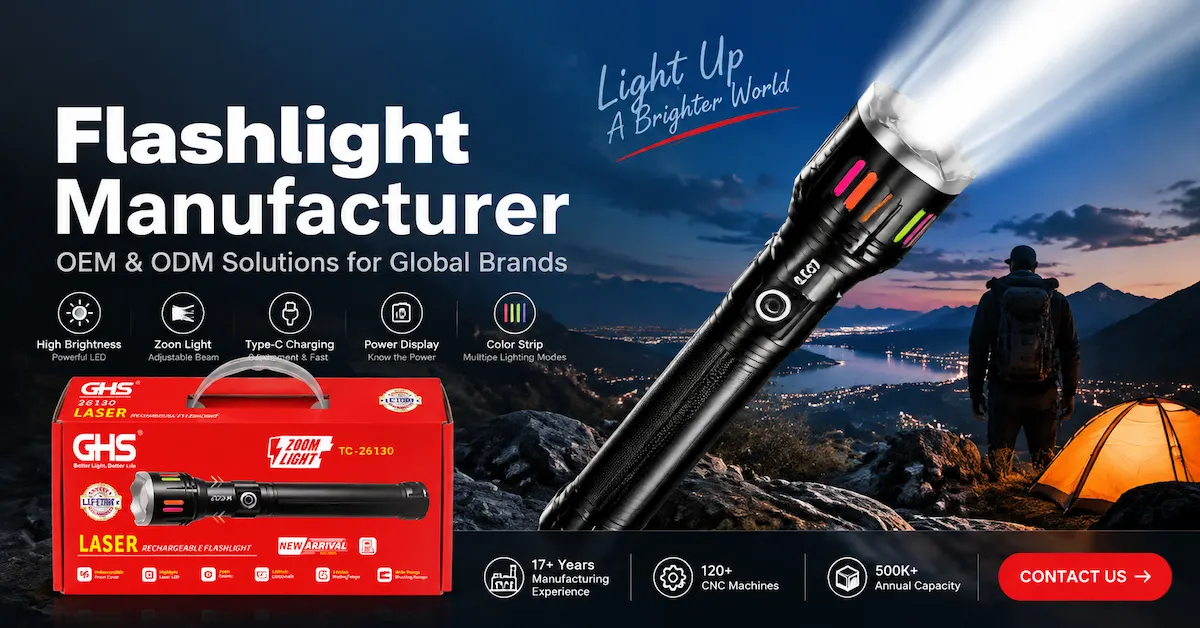
GHS presents itself as an integrated flashlight enterprise combining R&D, manufacturing, and sales. The company information shows that GHS operates a manufacturing facility with published capabilities including:
- 1,300㎡ factory area
- 120+ CNC machines
- 500K annual production capacity
- 17+ years manufacturing experience
These figures represent overall company capability. For specific projects, buyers should still confirm production schedules, available capacity, and product-specific manufacturing arrangements before placing bulk orders.
A capable tactical flashlight manufacturer should be able to explain how an approved sample becomes a controlled production standard, including:
- Product drawings
- Material requirements
- Assembly instructions
- Testing standards
- Packaging details
- Revision management
This production control is especially important for distributors and brands that need consistent products across multiple shipments.
Why Quality Certifications Matter When Choosing a Tactical Flashlight Manufacturer
Certification and compliance requirements depend on the target market, product type, and application environment. Professional buyers should not only ask whether a supplier has certifications but also verify whether the documentation applies to the specific flashlight model being purchased.
Important considerations include:
- Applicable market requirements
- Product testing scope
- Battery documentation
- Environmental requirements
- Customer compliance expectations
A responsible supplier should clearly explain:
- Which standards apply
- Which products have been tested
- Whether customization affects certification requirements
For tactical and professional applications, certification review helps buyers reduce risks related to market entry and customer acceptance.
How Should Buyers Compare Tactical Flashlight Models?
Before starting a completely new product development project, buyers should evaluate whether an existing flashlight platform already matches their application.
Existing platforms can reduce:
- Development time
- Sample cycles
- Engineering costs
- Production uncertainty
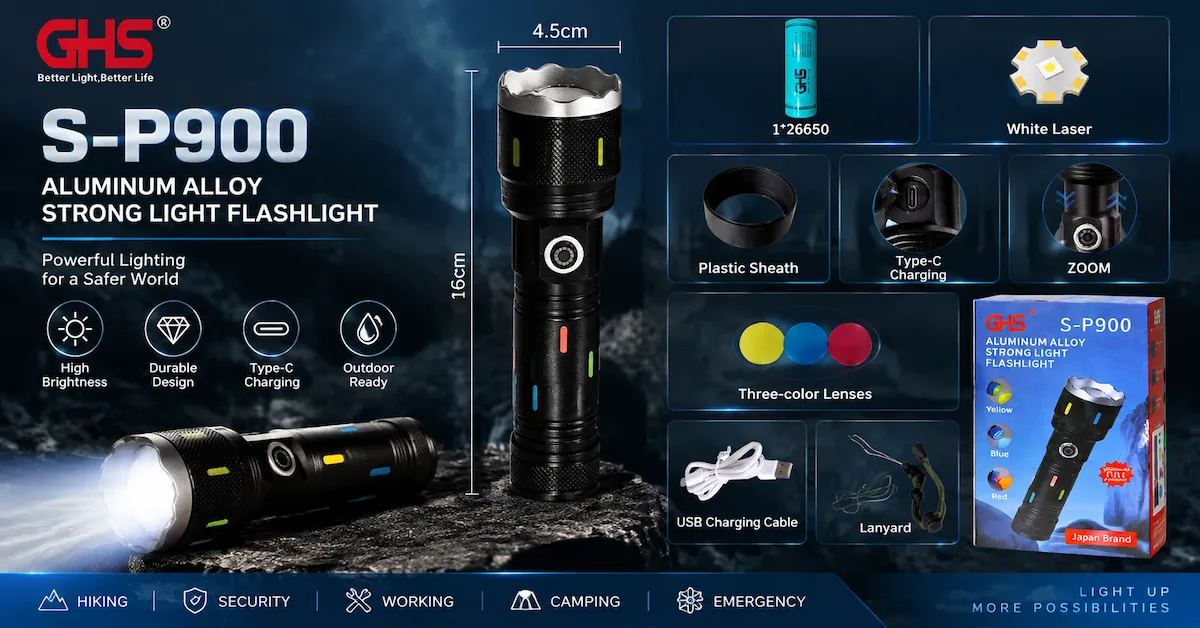
GHS provides different flashlight models that can be evaluated for professional and commercial applications.
| Model | Features | Suitable Application |
|---|---|---|
| S-P900 Rechargeable Zoom Flashlight | Rechargeable design with zoom function | Outdoor, inspection, professional lighting |
| TC-26130 Rechargeable Flashlight | Multifunction rechargeable platform | Outdoor brands and premium retail |
| TC-18130 Rechargeable Flashlight | Rechargeable multi-function design | Distributors and general lighting programs |
| TC-12130 Rechargeable Flashlight | Portable rechargeable solution | Private-label product evaluation |
| S-9031 Rechargeable Flashlight | Zoom and multifunction lighting design | Outdoor and professional users |
Buyers can review the complete GHS flashlight product range to compare available platforms before deciding whether standard purchasing, OEM customization, or ODM development is the most suitable route.
When Should Buyers Choose OEM Tactical Flashlight Manufacturing?
OEM is suitable when buyers already have a clear product direction but need a manufacturing partner to produce the product under their own brand.
Typical OEM requirements include:
- Logo customization
- Packaging design
- Product labels
- Accessories
- Color adjustments
- Retail materials
For distributors and private-label brands, OEM can help create product differentiation without requiring a completely new design.
However, buyers should clearly define which elements are customized and which remain standard. Changes involving electronics, battery systems, housing structure, optics, or charging systems may require additional evaluation.
When Is ODM Tactical Flashlight Development More Suitable?
ODM is more suitable when the buyer needs deeper product development support.
ODM projects may involve:
- New product concepts
- Structural optimization
- Function changes
- New configurations
- Prototype development
A professional tactical flashlight manufacturer should be able to evaluate whether the requested changes are practical from engineering, production, cost, and quality perspectives.
For example:
A security equipment company may require a specific switching system.
An outdoor brand may need a different battery solution.
A professional lighting distributor may need a unique product family.
Each situation requires different levels of development support.
Buyers planning private-label projects can review the OEM flashlight manufacturer guide to understand the difference between standard customization and deeper product development.
How Should Buyers Evaluate Tactical Flashlight Cost and Purchasing Risk?
Price is an important factor, but professional buyers should evaluate total sourcing value rather than only unit cost.
A tactical flashlight quotation may be affected by:
| Cost Factor | Influence |
|---|---|
| LED selection | Affects brightness and efficiency |
| Battery configuration | Affects runtime and safety |
| Housing material | Influences durability and cost |
| Optical structure | Affects beam performance |
| Packaging | Influences retail presentation |
| Customization | Changes development requirements |
| Testing requirements | Affects quality assurance cost |
| Order quantity | Influences production efficiency |
A lower price may also represent differences in:
- Material quality
- Battery configuration
- Inspection standards
- Packaging level
- Production control
Therefore, buyers should compare equivalent specifications before making purchasing decisions.
A professional supplier should help buyers understand where cost comes from and which product features create real value.
How Do MOQ and Lead Time Affect Tactical Flashlight Projects?
MOQ and lead time are important commercial factors for distributors and brands.
MOQ can be influenced by:
- Standard product availability
- Custom logo requirements
- Packaging quantity
- Product modifications
- Accessories
- Battery sourcing
Lead time usually includes:
- Product requirement confirmation
- Sample preparation
- Buyer evaluation
- Sample approval
- Material preparation
- Production
- Inspection
- Shipment preparation
A reliable tactical flashlight manufacturer should explain these stages clearly instead of providing only a single delivery estimate.
This helps buyers plan:
- Product launches
- Seasonal inventory
- Marketing schedules
- Distribution plans
How Should Buyers Approve Tactical Flashlight Samples?
Sample approval is a critical step before mass production.
A professional buyer should evaluate:
Product Performance
Including:
- Lighting modes
- Beam performance
- Runtime
- Charging function
- Switch operation
Physical Quality
Including:
- Housing finish
- Assembly accuracy
- Product dimensions
- Grip comfort
- Accessories
Commercial Details
Including:
- Logo position
- Packaging
- Labels
- User manuals
The approved sample should become the reference for future production.
Buyers should also record:
- Model number
- Product revision
- Battery configuration
- Packaging version
- Approved specifications
This prevents confusion when repeat orders are placed months later.
What Information Should Buyers Send to a Tactical Flashlight Manufacturer?
A detailed project brief allows suppliers to provide better recommendations.
Buyers should provide:
| Information | Example |
|---|---|
| Application | Security, outdoor, industrial |
| Market | Country and sales channel |
| Quantity | Trial order and forecast |
| Product type | Tactical, rechargeable, high-power |
| Beam requirement | Long-range or wide-area lighting |
| Battery | Rechargeable or replaceable |
| Charging | Type-C or other requirement |
| Environment | Waterproof, dust, impact requirements |
| Branding | Logo and packaging |
| Timeline | Launch schedule |
Companies interested in working with GHS can review the product catalog and submit project details through the Contact Us page.
Frequently Asked Questions
1. What should I look for in a tactical flashlight manufacturer?
Look for manufacturing experience, product knowledge, quality control capability, customization support, production consistency, and the ability to support repeat orders.
2. Are tactical flashlights only used by security professionals?
No. Tactical flashlights can also be used in outdoor activities, emergency applications, industrial inspection, maintenance, and professional equipment programs.
3. How do I compare different tactical flashlight suppliers?
Compare product specifications, manufacturing capability, sample quality, certifications, OEM support, pricing structure, MOQ, and delivery reliability.
4. Can a tactical flashlight manufacturer customize products?
Many manufacturers support customization such as logos, packaging, accessories, colors, and selected product configurations. More complex modifications require engineering evaluation.
5. What makes a tactical flashlight durable?
Durability depends on housing materials, assembly quality, sealing structure, battery system, thermal management, and component reliability.
6. Is a rechargeable tactical flashlight better for professional users?
Rechargeable models can provide convenient daily use, while replaceable batteries may suit certain field applications. The best option depends on the operating environment and user requirements.
7. How should I verify flashlight waterproof performance?
Confirm the applicable protection level, testing conditions, and whether the tested configuration matches the final product version.
8. What affects tactical flashlight manufacturing cost?
Cost depends on materials, electronics, battery configuration, product complexity, customization, packaging, testing, and order quantity.
9. How can brands develop private-label tactical flashlights?
Brands can start with an existing platform and customize branding, packaging, accessories, or selected specifications. More advanced requirements may involve ODM development.
10. Why is repeat-order consistency important?
For distributors and brands, repeat-order consistency protects customer experience, inventory planning, and long-term product reputation. The approved sample and production specification should remain connected throughout future orders.
Conclusion
Choosing a tactical flashlight manufacturer requires a complete evaluation of product performance, manufacturing capability, quality control, customization support, and supply reliability. Professional buyers should focus on application requirements first, then compare beam performance, battery systems, materials, production processes, certifications, cost structure, MOQ, and lead-time factors.
A reliable manufacturing partner should not only provide a functional flashlight but also support stable production from prototype approval to repeat orders. GHS provides flashlight product platforms, manufacturing capability, OEM/ODM support, and sourcing assistance for global buyers. Companies evaluating tactical flashlight solutions can explore the GHS flashlight products, learn more about manufacturing capabilities through About Us, and contact the team through Contact Us with application details, quantity requirements, and customization needs.