
High-Intensity Rechargeable Flashlight for Field Work, Emergency Use, and Portable Lighting
A high-intensity rechargeable flashlight solves a simple but critical problem: you need strong, directed light without relying on disposable batteries or fixed power. For buyers who work outdoors, travel by vehicle, inspect equipment, or prepare emergency kits, a compact rechargeable torch can reduce downtime and keep illumination available when mains power is not. The product shown here is a handheld metal-bodied flashlight with a focused head design, side controls, grip texture, and charging-related features that make it suitable for everyday carry, camping, search tasks, and backup use during outages.
Product Overview
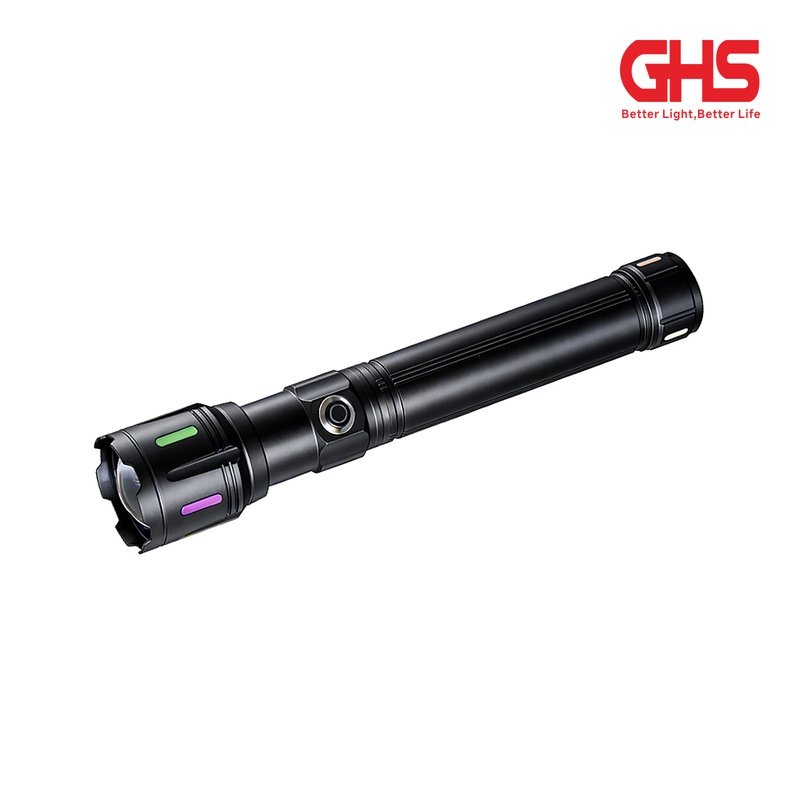
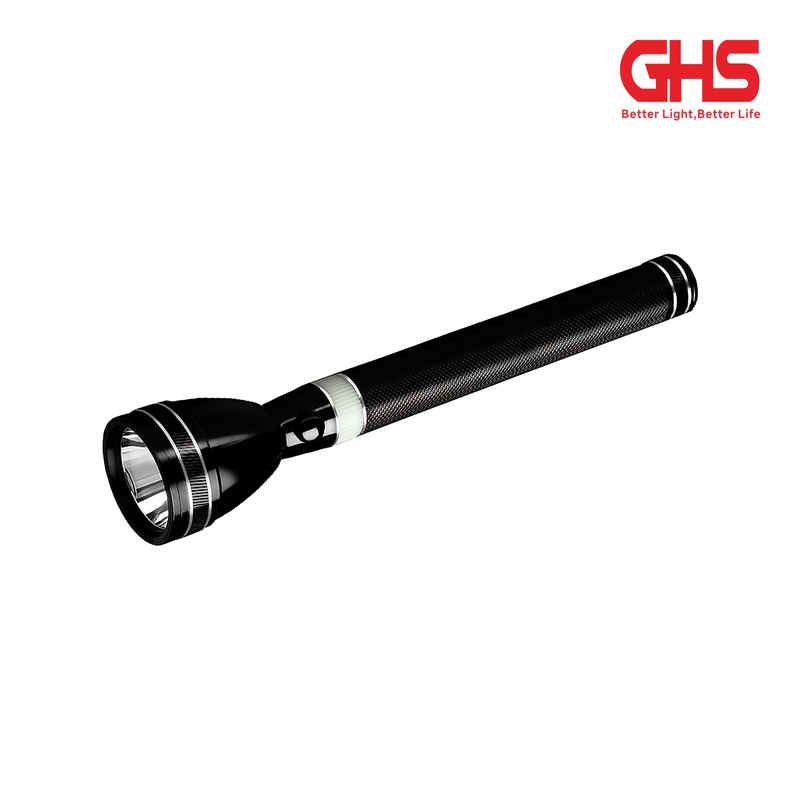
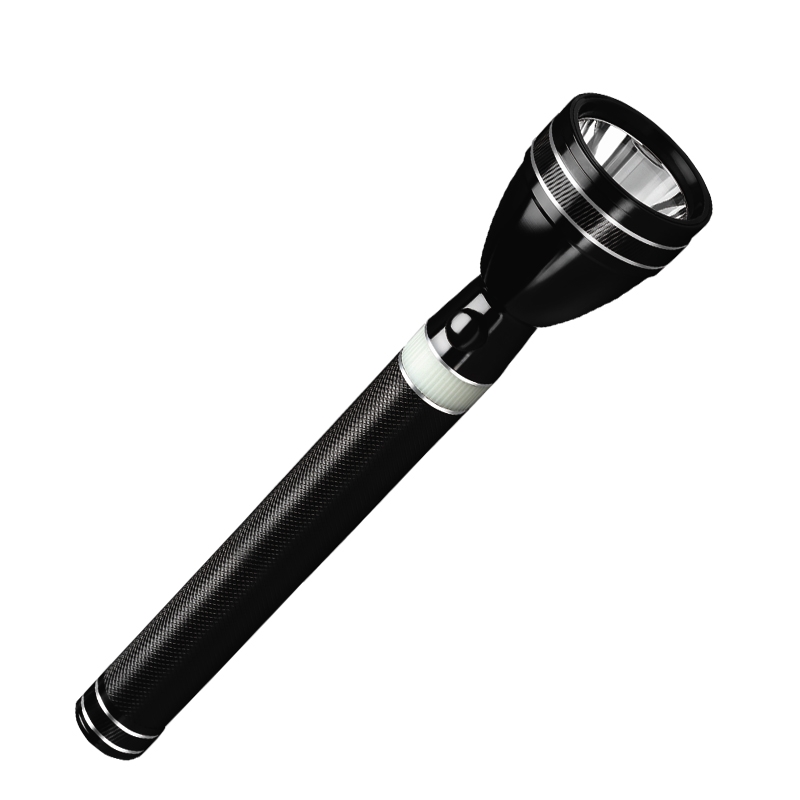
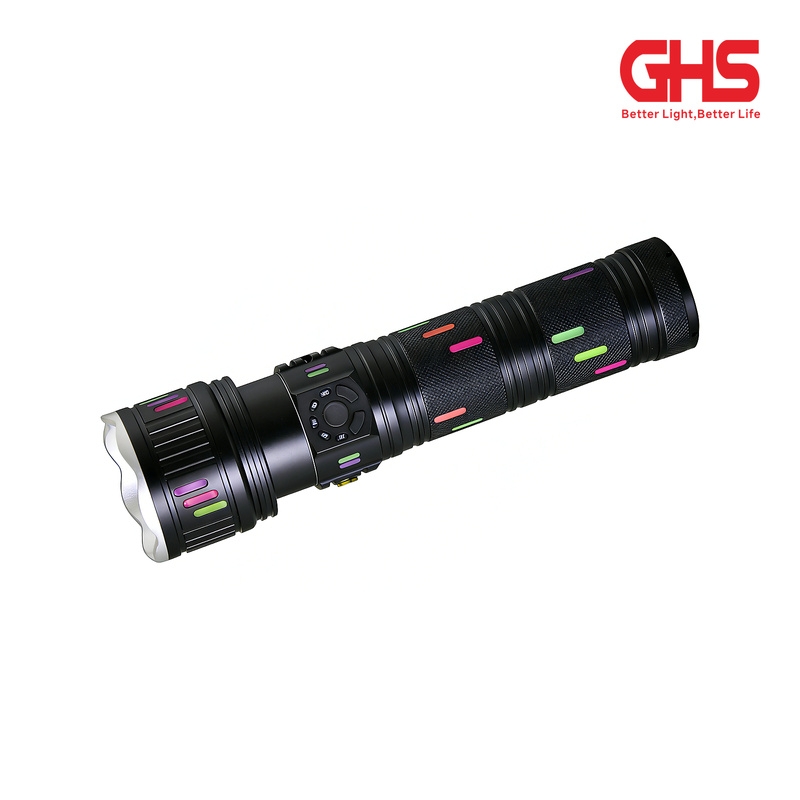
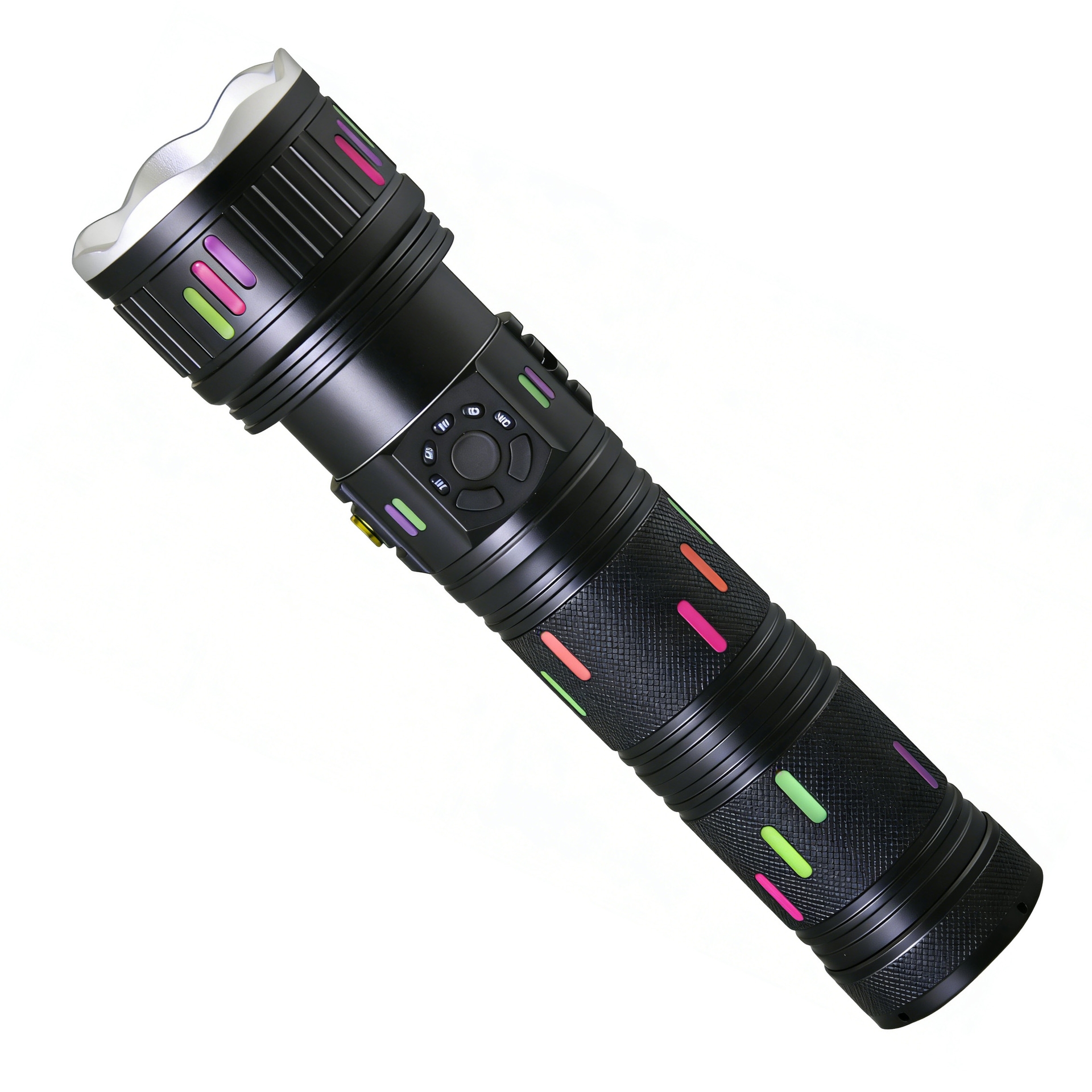
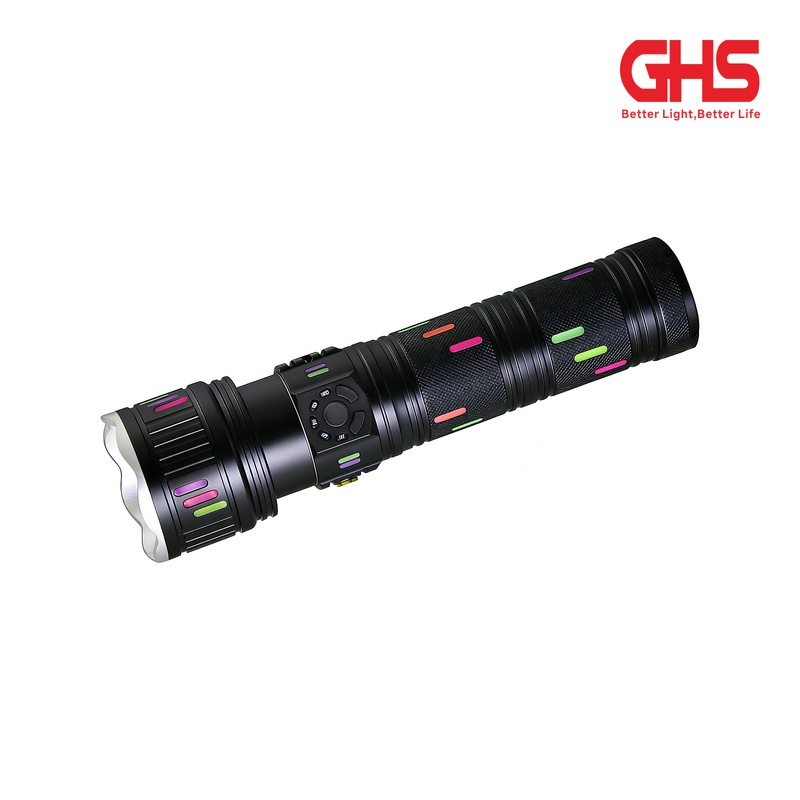
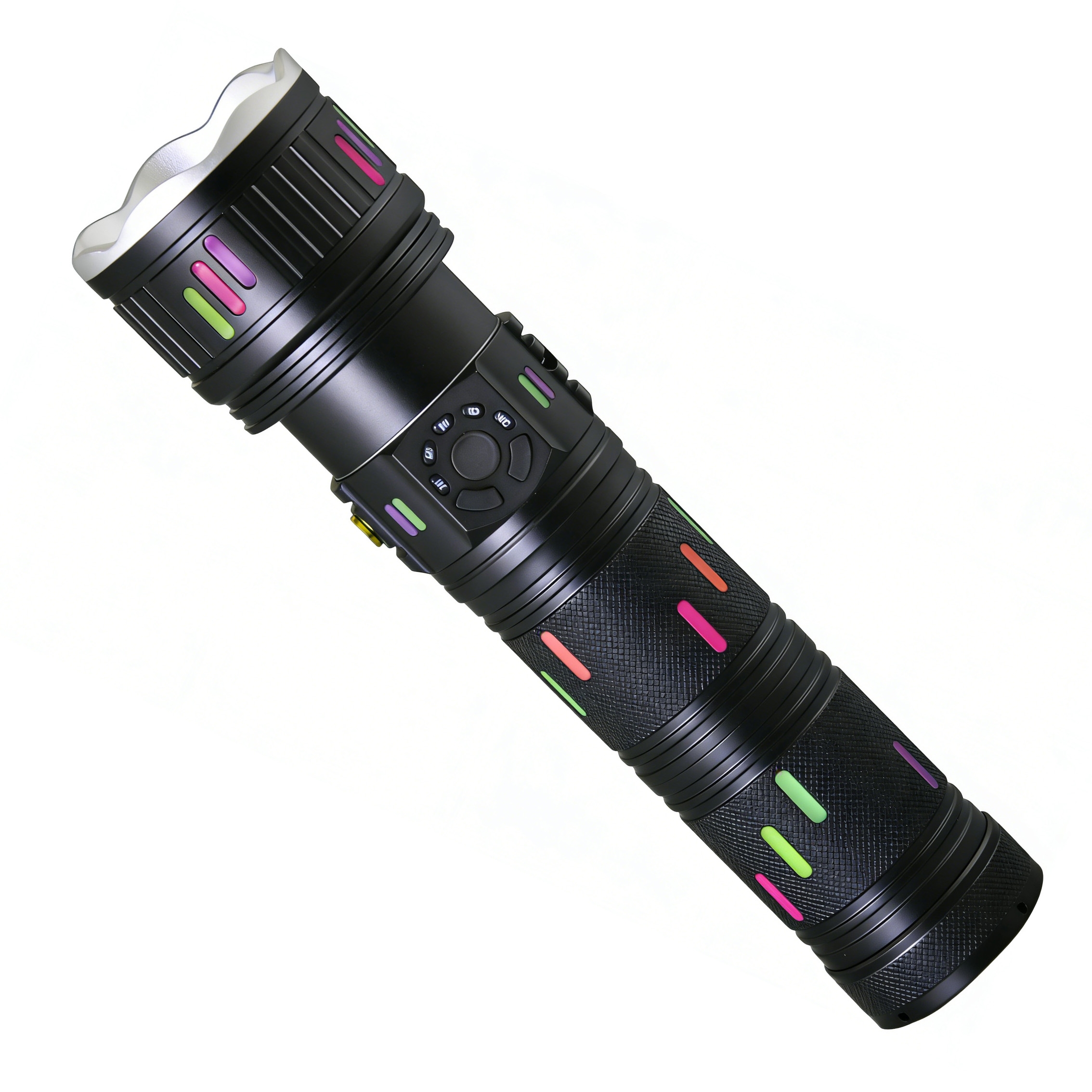
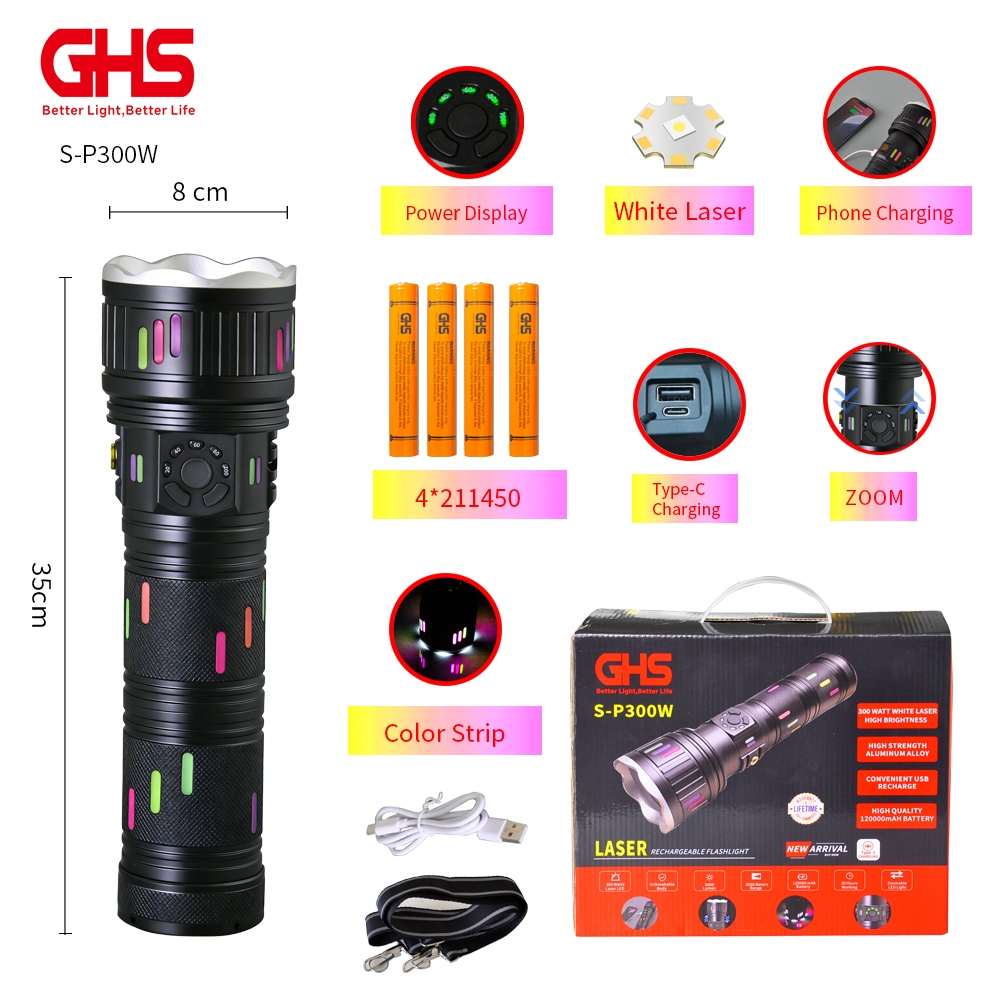
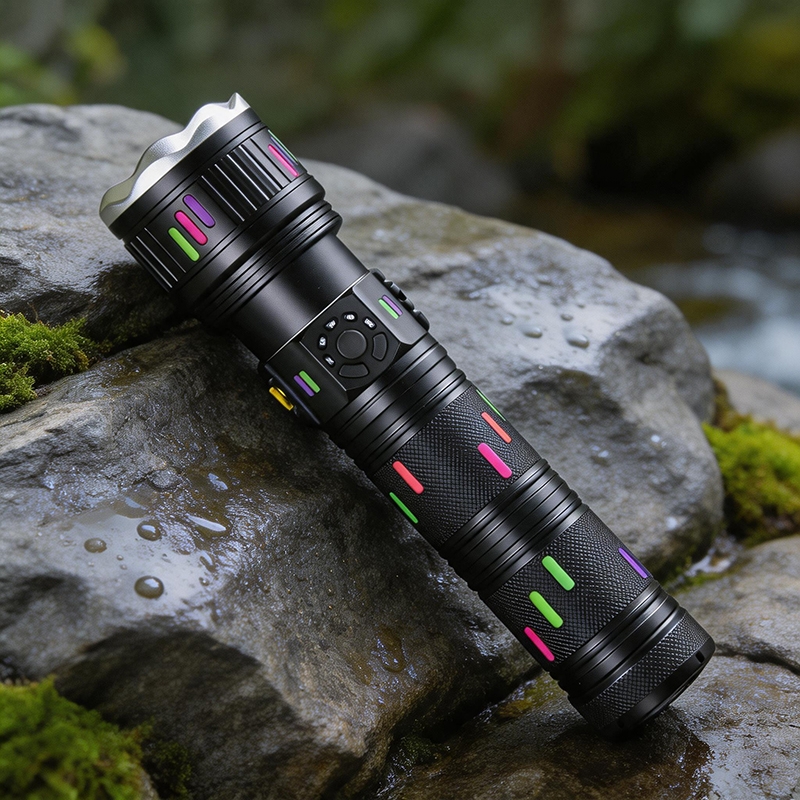
This flashlight is a long, cylindrical handheld light with a wider front head and a narrower body section for grip. The visible construction suggests a rugged portable tool rather than a decorative consumer lamp. The body appears to be metal, likely aluminum alloy, with a black finish and textured ring sections for handling. Decorative accent markings in pink, green, and orange add visual distinction, while the silver-toned bezel around the head supports a beam-focused design.
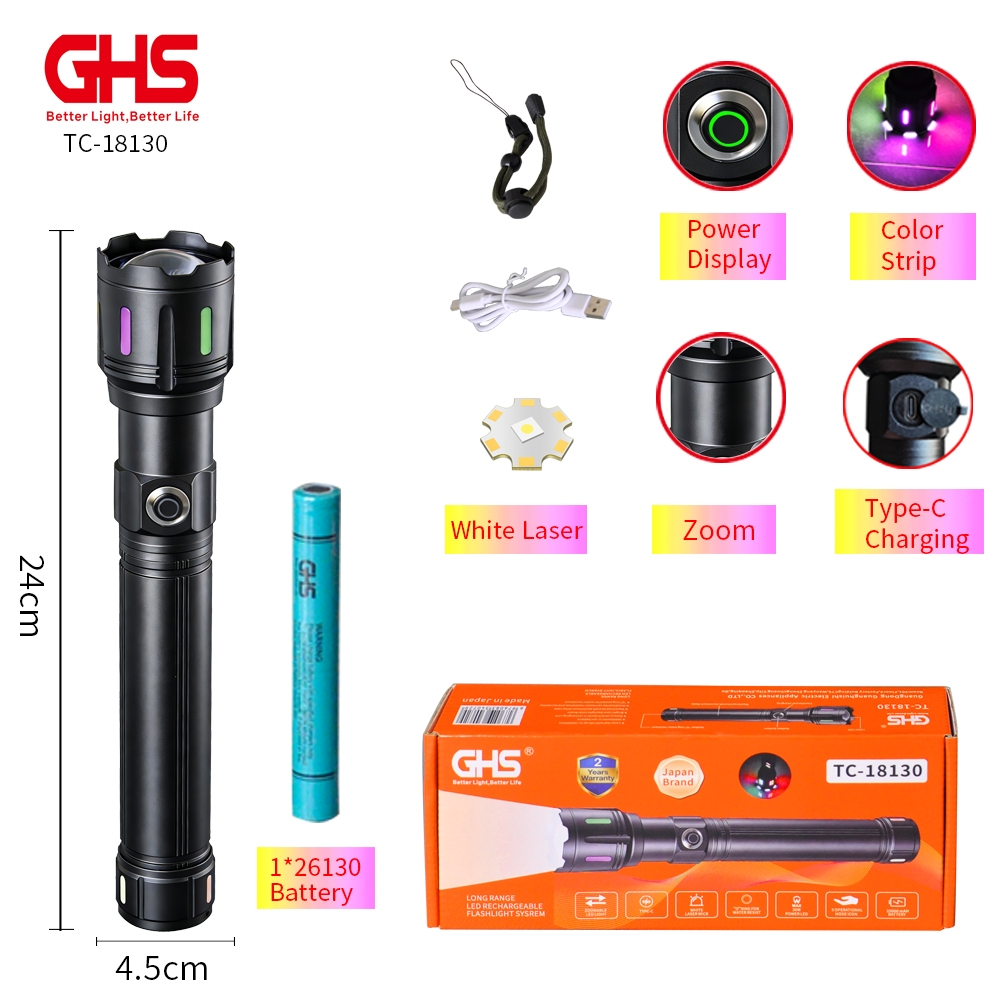
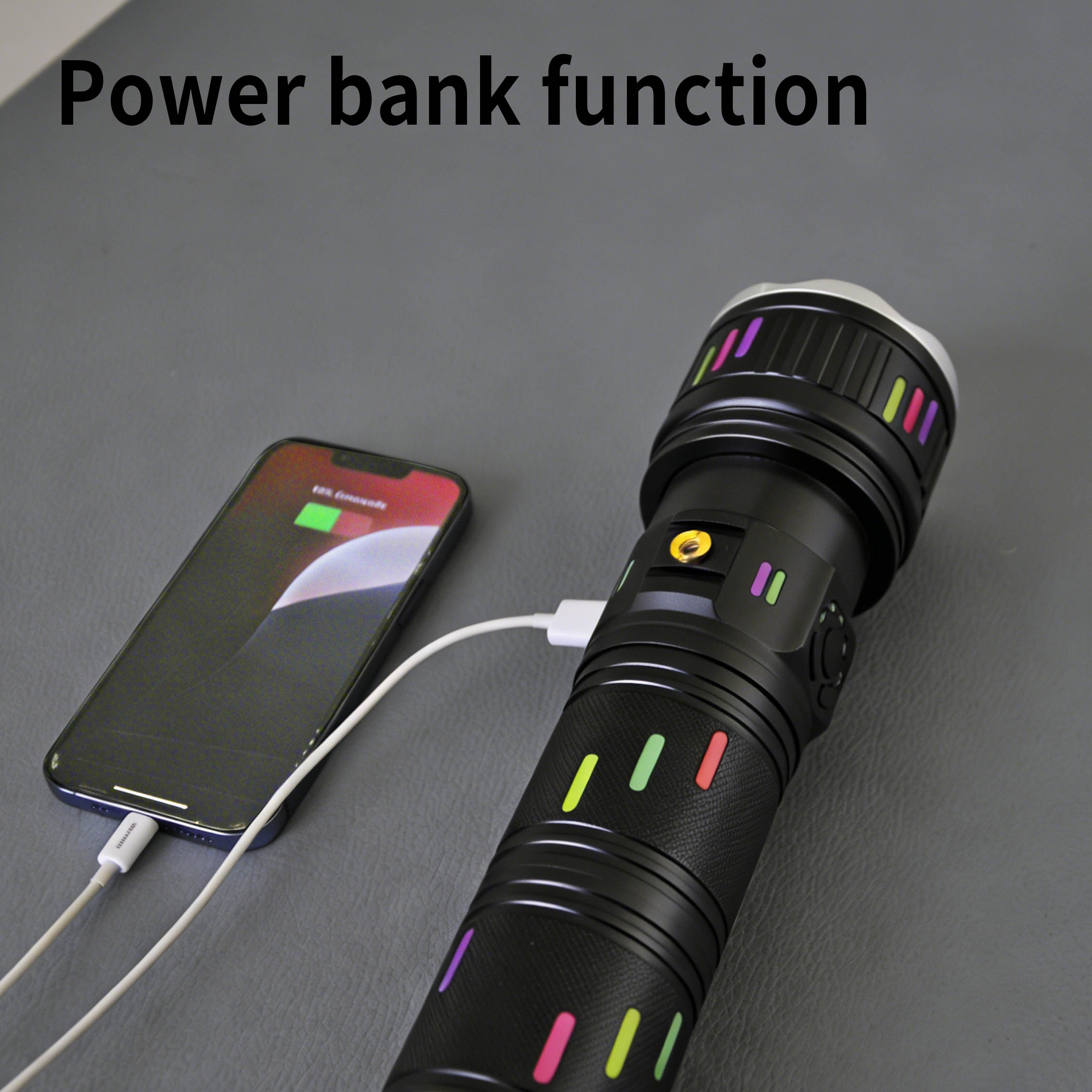
From the available images and product notes, this model appears to combine illumination with extra utility. Depending on the version shown, it may include zoom control, power display indicators, Type-C charging, and a phone-charging function. That makes it more than a basic torch: it can serve as an emergency light source and a practical backup power tool for mobile devices.
Key Visible Specifications and Functional Features
Form factor and handling
The flashlight has a tubular body with multiple ringed sections and side-mounted control points. The shape supports one-handed use and easy storage in a vehicle, bag, or tool kit. A lanyard or shoulder strap is also pictured in one of the supplied views, which is useful for carrying during outdoor movement or while working.
Head and beam design
The front section uses a wider reflector-style head, which indicates a beam intended for directed illumination. One image also references a zoom function, suggesting the light can likely be adjusted between a broader flood pattern and a tighter beam. The exact optical output is not stated, so claims about lumen level or beam distance should not be assumed.
Power and charging-related features
Several visible elements point to a rechargeable system. One version shows Type-C charging, and another shows the flashlight charging a smartphone through a USB cable, indicating a power bank function. The packaging also mentions a battery configuration labeled “4*211450,” which appears to refer to four rechargeable cells. Since this is only image-based information, the exact battery capacity and electrical performance should be confirmed before purchase.
Control and status indication
Side buttons and indicator areas are visible on the body. These elements are commonly used for on/off switching, brightness selection, charging status, or mode control. A power display is also referenced in the supplied data, which is helpful for users who want to monitor remaining battery status during field use.
Materials and Surface Finish Options
The visible housing appears to be a machined or assembled metal flashlight, likely made from aluminum alloy or a similar lightweight metal. The matte-to-semi-gloss black finish suggests an anodized or coated surface, which is commonly used to improve wear resistance and appearance. Textured grip zones and knurled sections can improve handling in gloves or damp conditions.
Based on the image alone, it is not safe to claim exact material grade, coating thickness, or corrosion rating. However, the overall construction style aligns with a durable utility flashlight designed for repeated handling rather than casual indoor use.
Manufacturing and Assembly Considerations
Products in this category are typically made through a combination of metal forming, CNC turning, die casting, threading, surface finishing, and final electronic assembly. The visible body geometry, ringed transitions, and head-to-barrel structure are consistent with a machined flashlight housing. Internal components would normally include an LED module or beam-emitting assembly, battery pack, charging circuit, control board, and protective wiring.
Because internal specifications are not fully visible, it is best to evaluate this flashlight as an assembled electromechanical product rather than assuming any particular LED chip, optical lens type, or protection rating. For procurement, the key is to verify the required use case, charging method, and accessory package before bulk ordering.
Application Scenarios
Outdoor and camping use
A high-intensity rechargeable flashlight is useful for campsite setup, nighttime walks, tent lighting, and route checking. A zoomable beam and rechargeable power source help reduce dependence on spare batteries and keep the device ready for repeated outings.
Emergency and household backup
Power cuts, storm outages, and vehicle emergencies are classic use cases for a rechargeable torch. The phone-charging function shown in the product data adds another layer of utility, especially when a charger or wall outlet is unavailable.
Inspection, maintenance, and workshop tasks
Technicians often need a handheld light that can fit into tight spaces, point at fasteners, or illuminate dark compartments. The grip texture and side controls make this style of flashlight practical for workbenches, machinery checks, and vehicle inspection. For security patrols or general utility lighting, a focused beam can help identify objects at a distance.
Quality Control and Buyer Evaluation Points
When sourcing this type of product from a rechargeable flashlight supplier, buyers should check a few practical details rather than relying on appearance alone. Confirm the actual battery configuration, charging interface, and included accessories. If the flashlight is intended for field or emergency use, ask whether the power display is reliable, whether the side button layout is stable under repeated use, and whether the charging port is reinforced against wear.
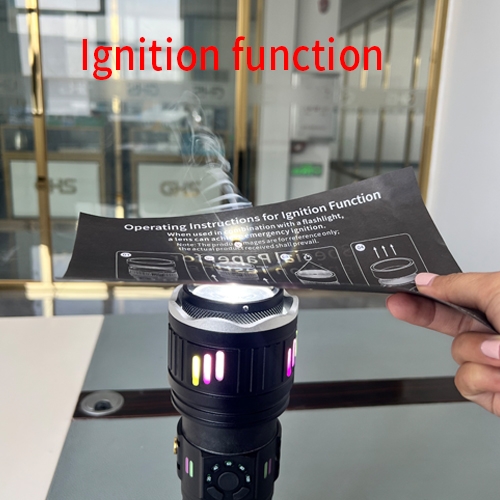
It is also important to verify what the flashlight can and cannot do. The supplied information does not confirm waterproof performance, impact resistance, runtime, beam distance, or exact brightness. Those are major procurement factors for industrial, security, or outdoor buyers, and they should be documented in the final product specification sheet.
Customization Guidance for OEM and Bulk Buyers
For B2B projects, customization may include body color, logo marking, packaging design, strap style, charging cable type, and user manual language. Some buyers may also request adjustments to the side button layout, indicator style, or accessory bundle. If a multicolor LED flashlight version is desired, the optical layout and control board should be confirmed in advance so the color modes are defined clearly rather than implied.
Before placing a custom order, provide your target market, expected use environment, and preferred feature set. A flashlight intended for camping retailers may prioritize portability and charging convenience, while a patrol or maintenance version may emphasize grip, beam focus, and long service intervals. Clear requirements reduce revision cycles and help the supplier match the final build to the application.
Decision Factors for Buyers
Choosing a rechargeable flashlight should not come down to appearance only. Buyers usually compare body durability, charging method, battery pack layout, size, carried weight, control simplicity, and whether the unit can do more than one job. In this case, the visible phone-charging feature is a useful differentiator for emergency kits and travel use. The zoom function and indicator display can also improve day-to-day practicality.
For sourcing teams, the most useful questions are straightforward: Does the beam suit the task? Is the charging system compatible with the intended market? Are spare accessories available? Can the supplier support consistent branding and packaging? Those answers matter more than unverified performance claims.
Conclusion and Inquiry Support
This high-intensity rechargeable flashlight combines portable lighting, a rugged handheld form, and utility-oriented features such as charging support and visible power indication. It is well suited to outdoor carry, emergency readiness, inspection work, and general illumination tasks. If you are comparing options for private label, wholesale, or project supply, request a full specification sheet and confirm the features that matter most for your application.
If you need a rechargeable flashlight supplier that can help align product structure, accessories, and branding with your market, send your required configuration and use case details for a quotation and sample discussion.