
Rechargeable LED Flashlight for Portable Lighting and Field Use
A rechargeable LED flashlight is a practical answer for buyers who need dependable handheld lighting without relying on disposable batteries. For camping, inspection, security rounds, roadside checks, or emergency backup, the main problem is simple: you need a compact light that is easy to carry, quick to operate, and suitable for repeated use. This model is presented as a tactical-style torch with a cylindrical metal body, side switch, Type-C charging, and a zoom-style beam design, making it a useful option for general-purpose illumination and work lighting.
Product Overview
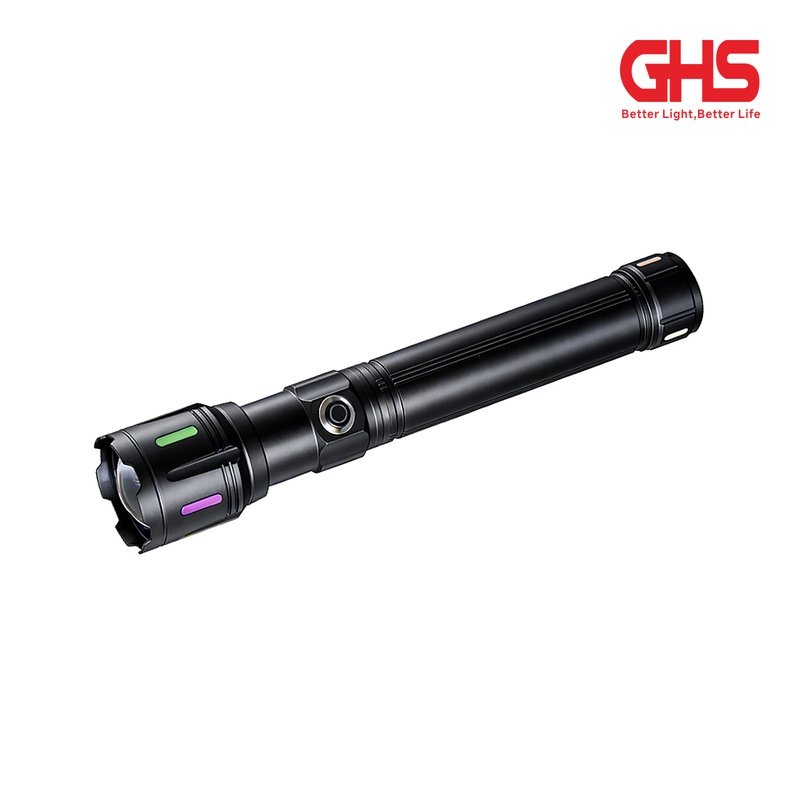
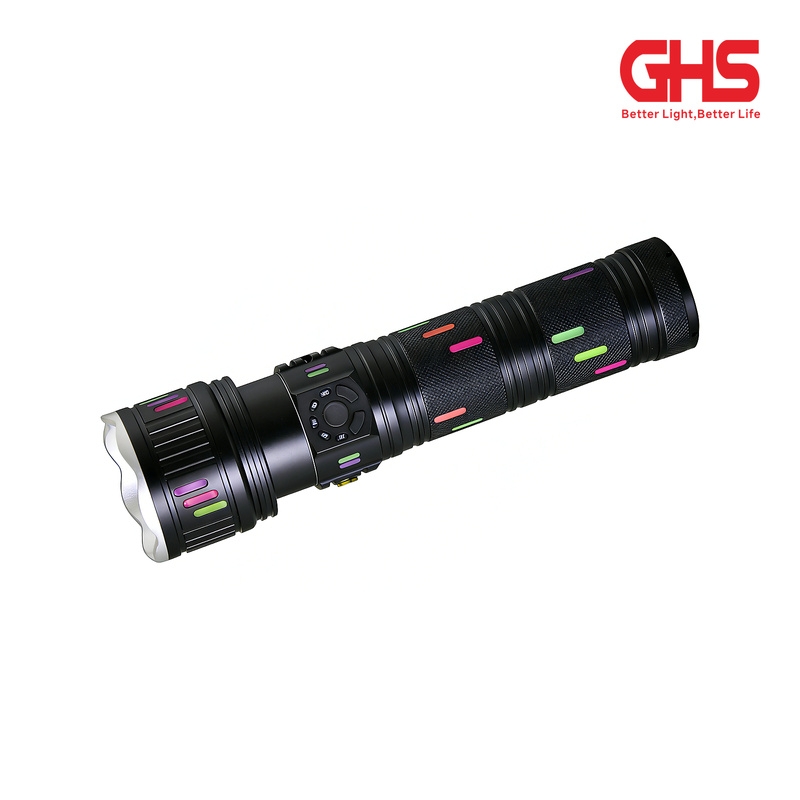
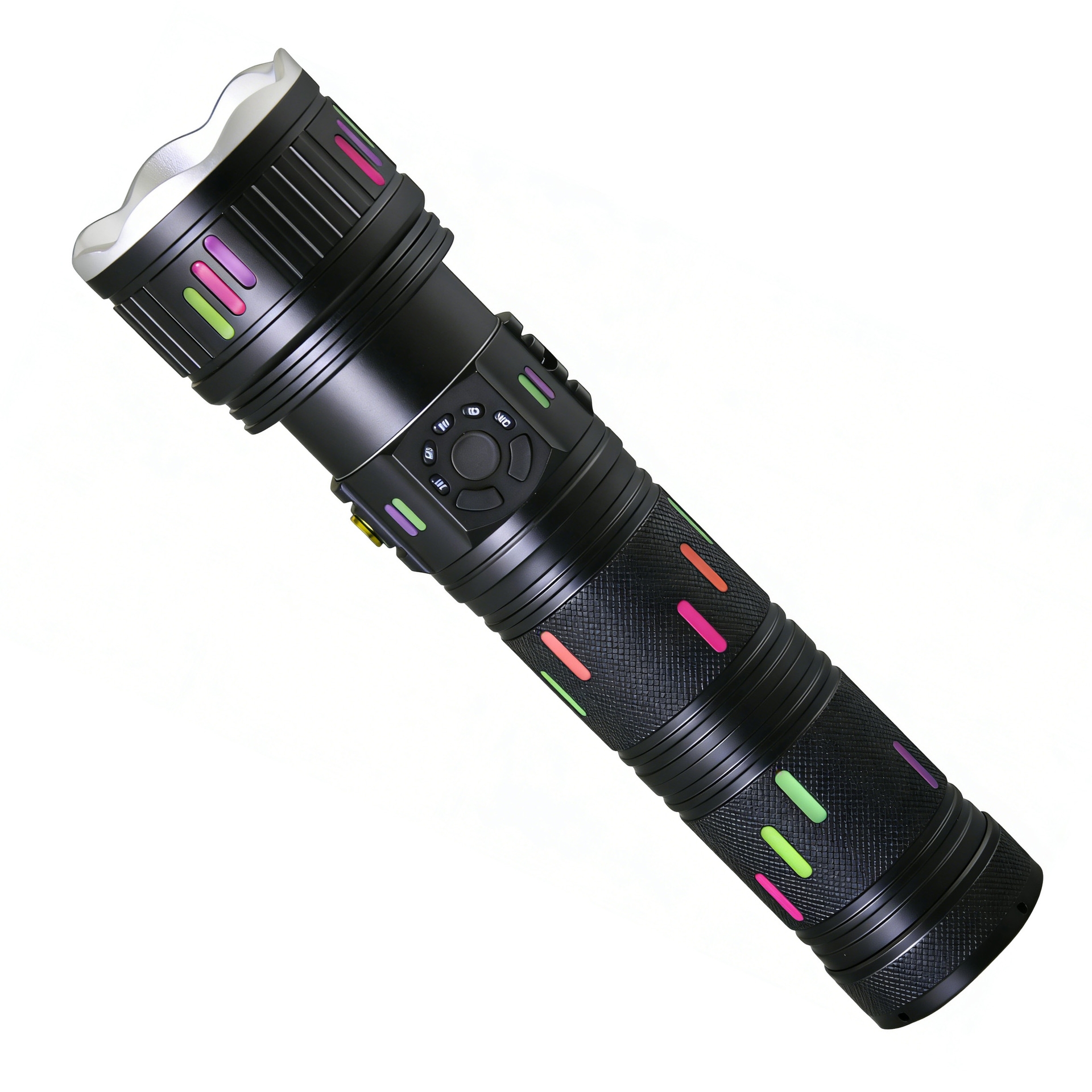
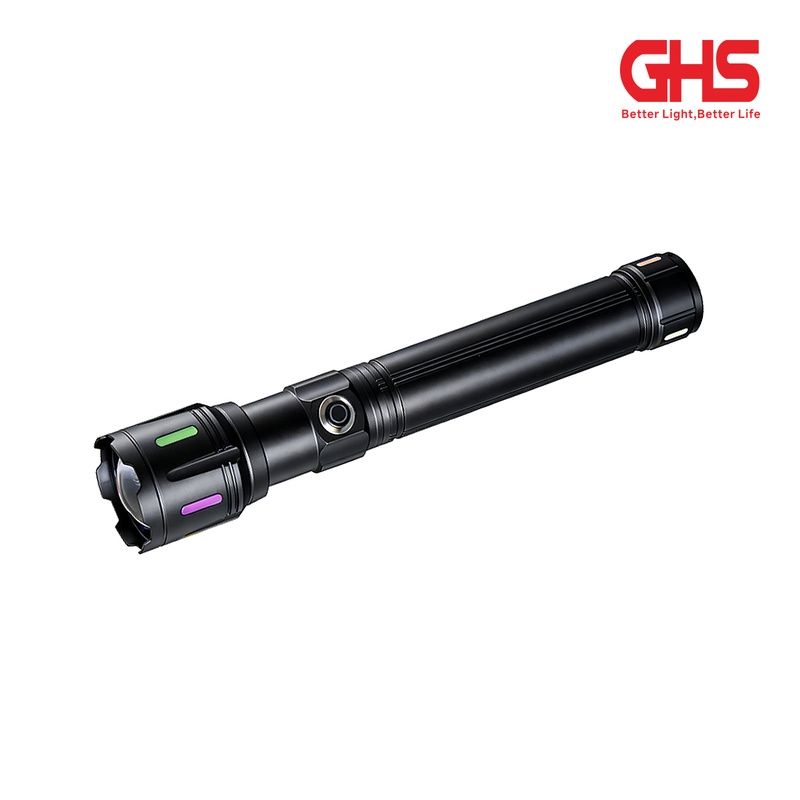
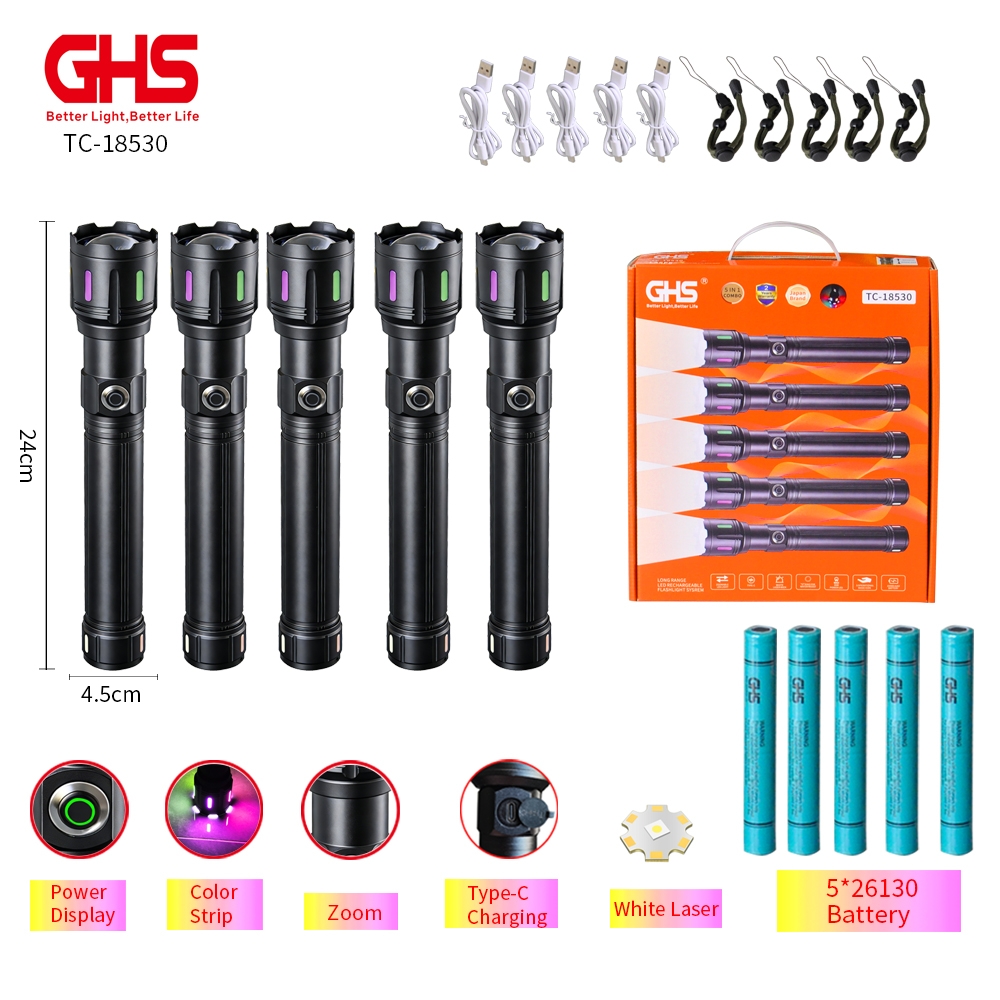
Model TC-18530 is shown as a handheld flashlight set built around a slim tubular body with a larger front head and a side-mounted control button. The visible design suggests a metal housing, likely aluminum-based, with a matte black finish and machined grip sections. That structure is common in utility flashlights because it helps with handling, heat dissipation, and durability in daily carry applications.
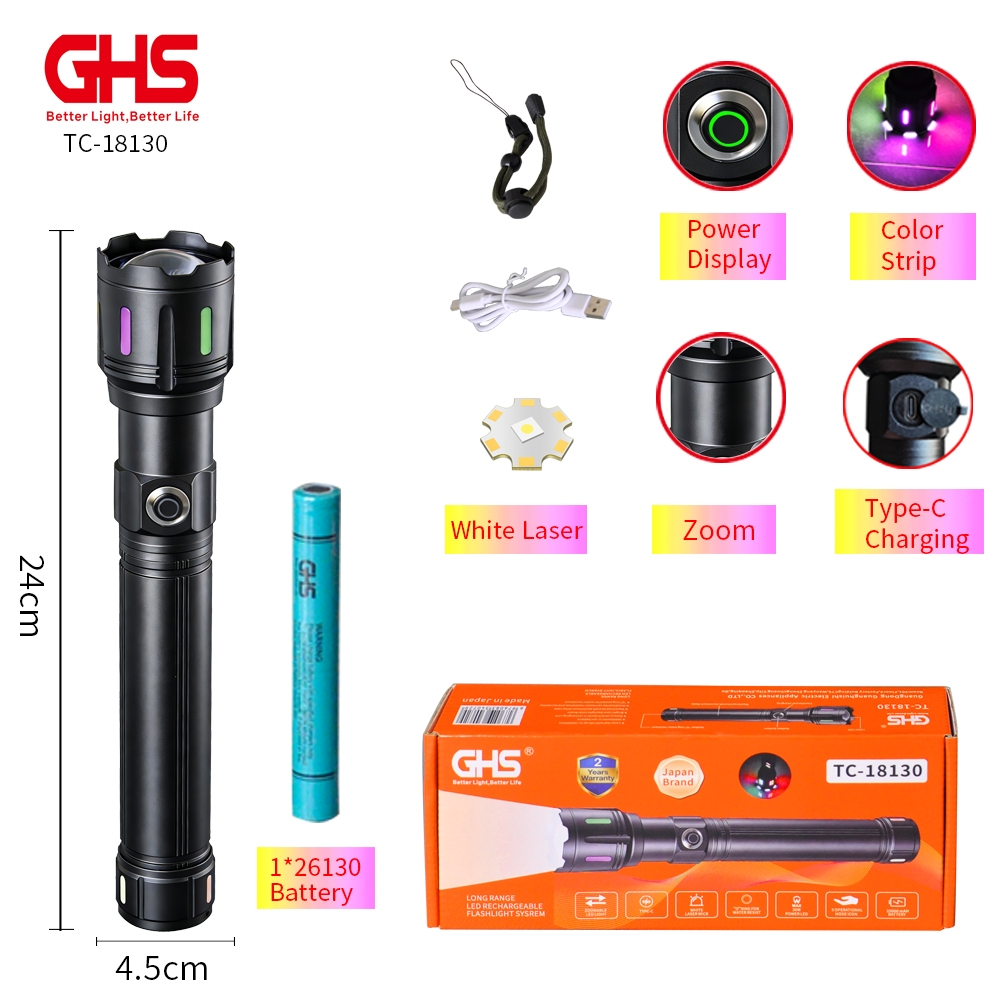
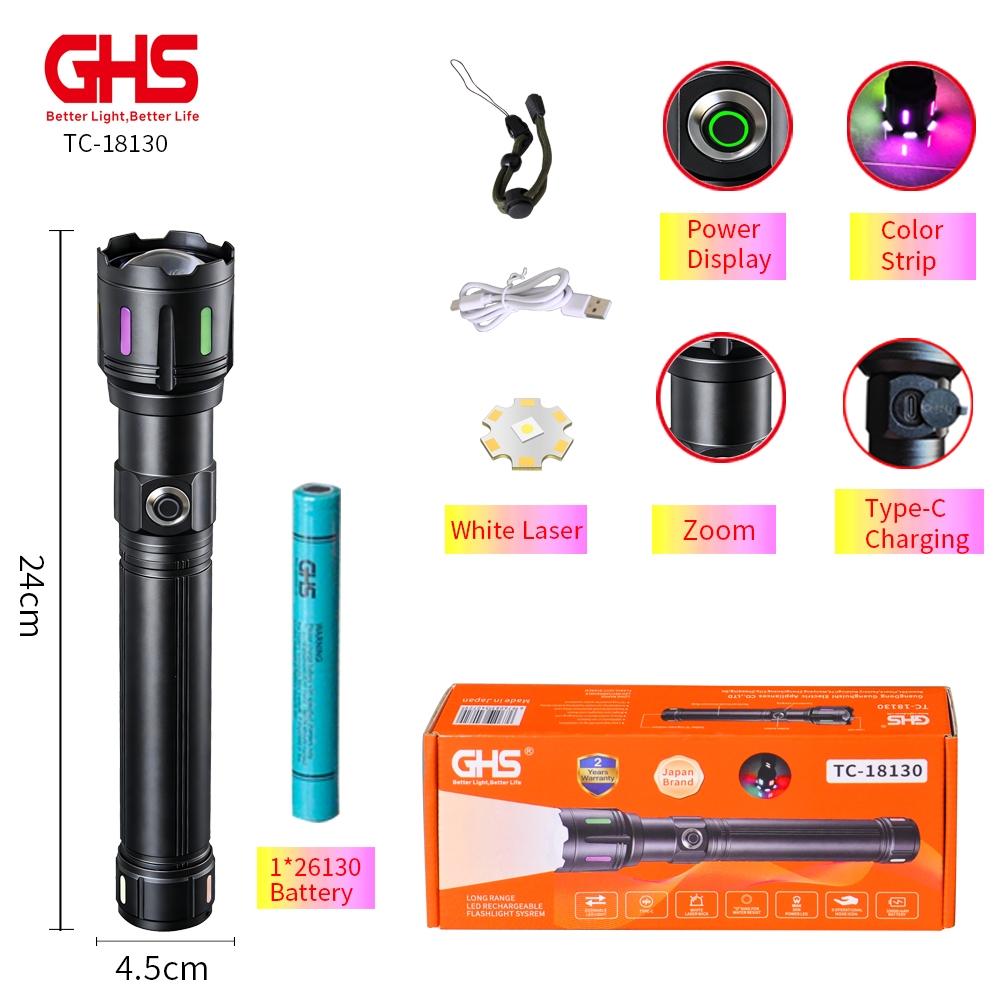
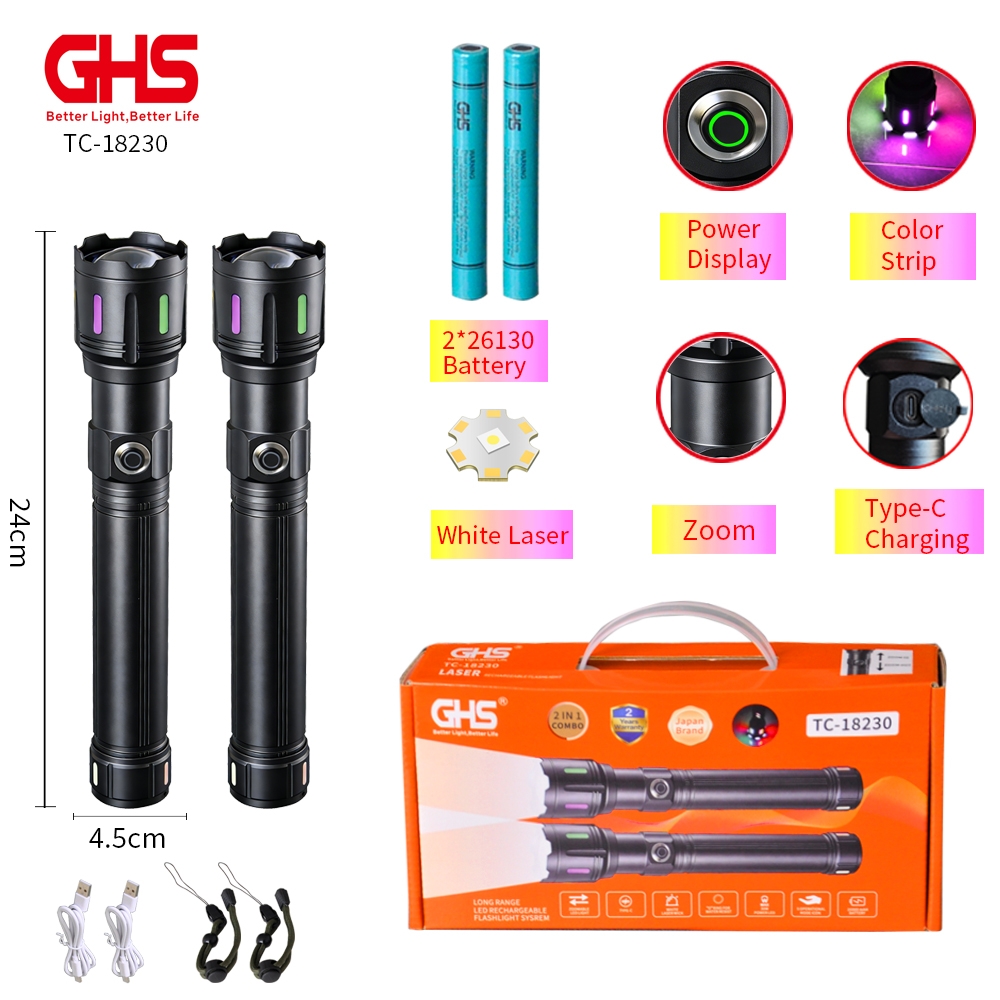
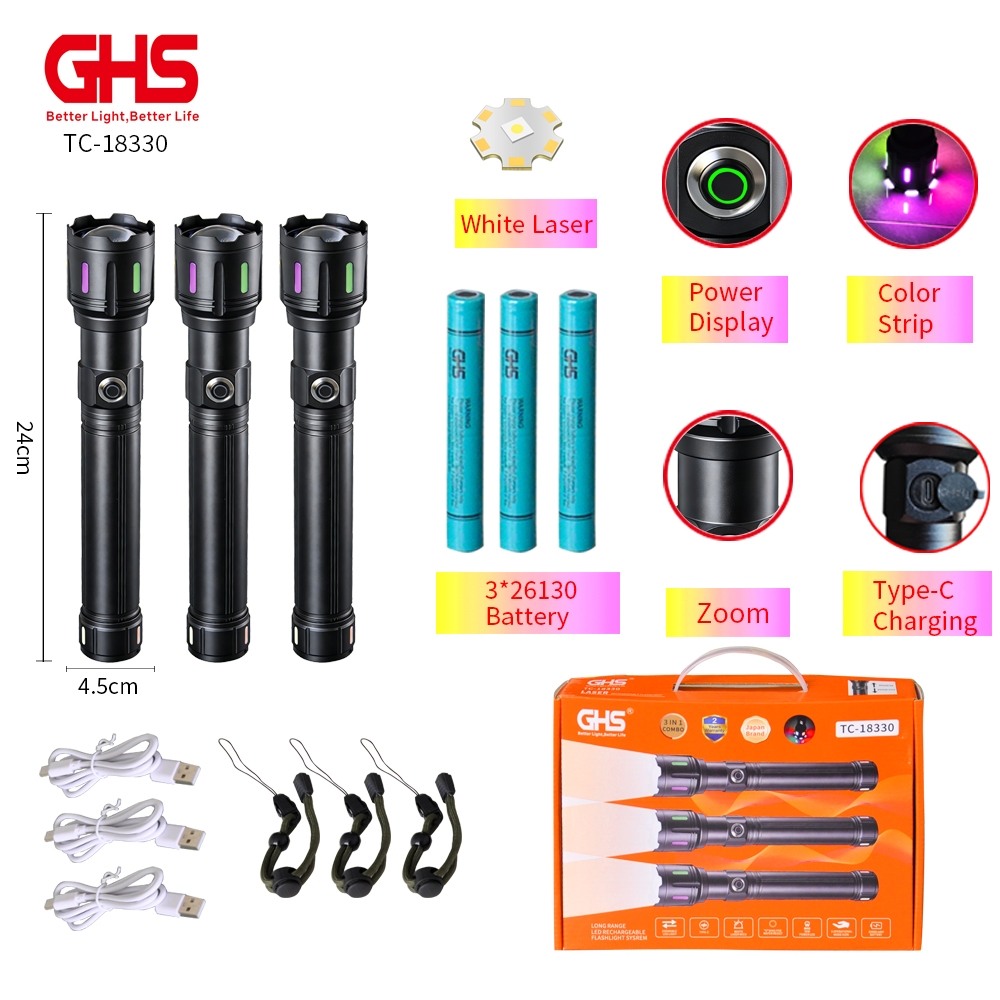
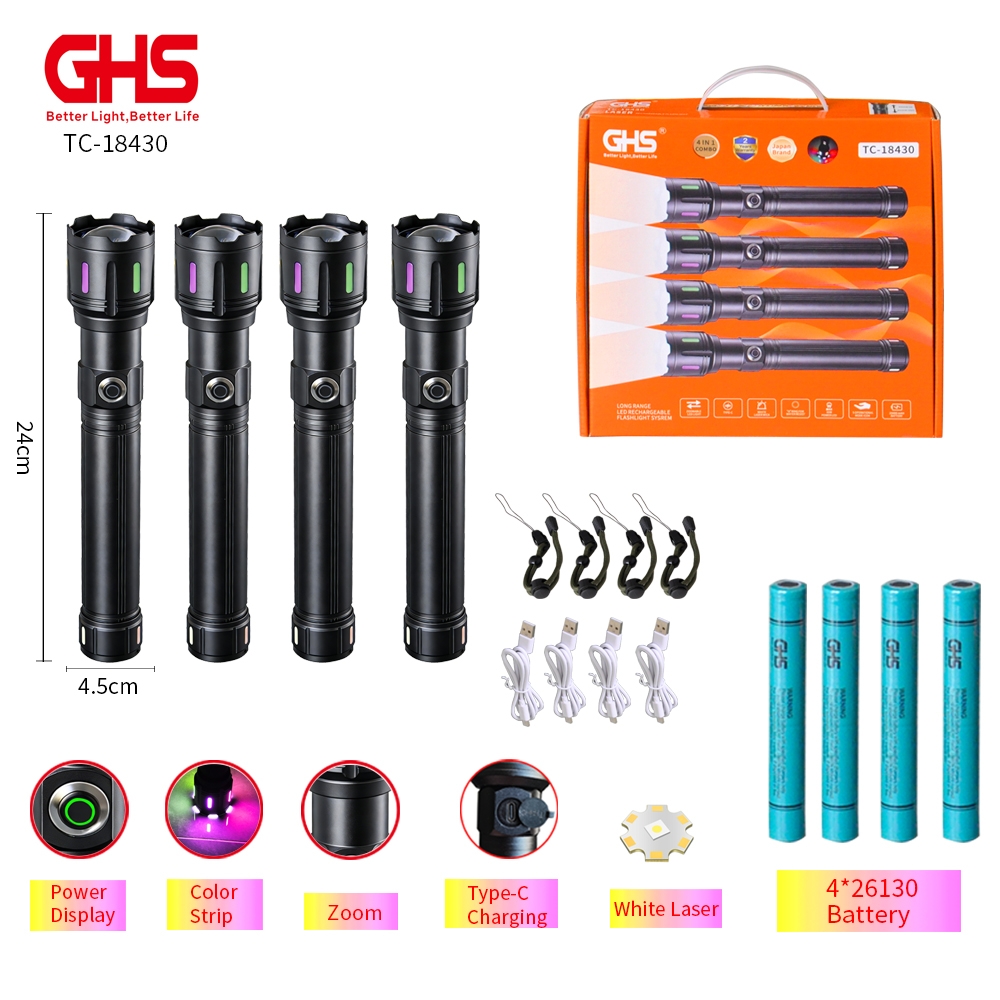
The product images also indicate a rechargeable layout with a side Type-C charging port, a battery display on the tail end cap, and included accessories such as charging cables, straps, and 5 x 26130 batteries. The exact internal LED module, battery capacity, and water resistance are not provided, so those details should be confirmed by the buyer before specification-based procurement.
Visible Specifications and Functional Features
Size and form factor
The product image labels the flashlight at about 24 cm long and 4.5 cm in diameter. That puts it in a portable, one-hand category rather than a pocket penlight. The elongated shape is suitable for users who want a stable grip and a beam that can be aimed comfortably during inspection or outdoor use.
Operating and charging layout
A side push button is visible on the body, which typically supports quick access to power and mode changes. The image also shows a side Type-C charging port, an important convenience point for buyers who want modern cable compatibility. Compared with older charging styles, Type-C is easier to source and simpler to standardize across kits and field equipment.
Beam control and additional light effects
The product visuals suggest a zoom function, meaning the beam focus may be adjustable from a wider flood pattern to a more concentrated spot. The image also references a “white laser” and a “color strip” effect, but the exact technical implementation is not visible. Those features should be treated carefully in procurement documents until the supplier confirms whether they are separate modules, optical effects, or marketing labels.
Materials and Finish Options
The flashlight body appears to be a black anodized or matte-finished metal housing, likely aluminum or a similar lightweight alloy. In this product category, anodizing is commonly chosen because it improves surface appearance and helps the shell resist everyday wear. The visible knurled or ribbed sections also improve grip, especially when hands are wet, gloved, or used in low-light conditions.
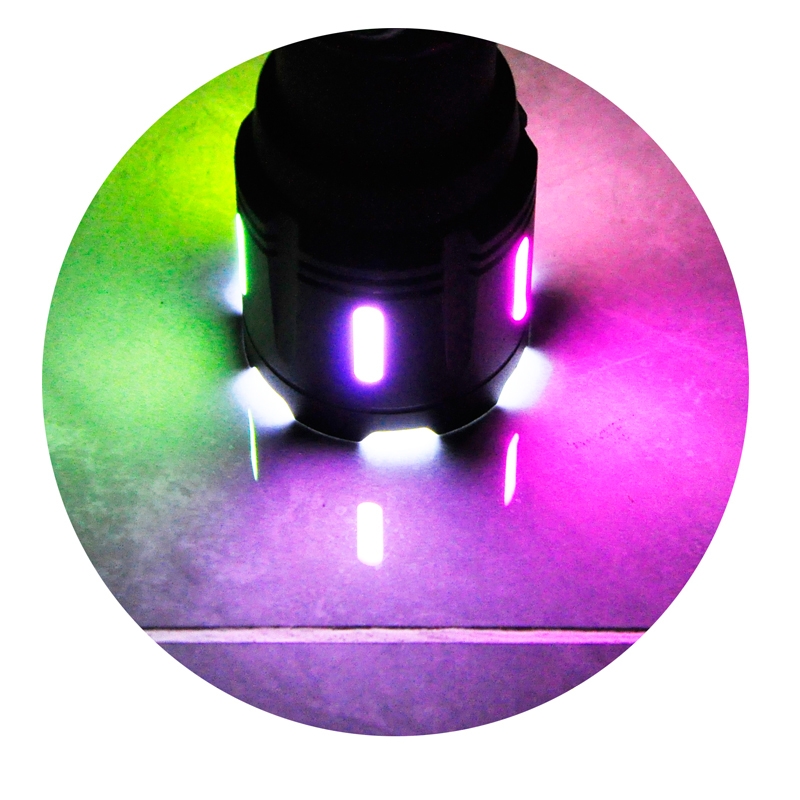
Accent rings near the head appear in purple and green tones in the supplied images. These may be decorative, functional, or part of the visible styling package. Because the image does not confirm their purpose, buyers should not assume they indicate a specific optical mode or performance feature.
Manufacturing and Assembly Considerations
This product belongs to the assembled LED flashlight category, where the housing, optics, power system, and control electronics are brought together as a complete handheld unit. The shell may be produced through CNC machining, extrusion, or a combination of methods, then finished with surface treatment and assembled with electronic subcomponents.
For this type of product, key production steps usually include housing machining, threading and fit inspection, anodizing or surface finishing, reflector and lens assembly, switch installation, charging-port integration, battery pack matching, and final function testing. Because the exact internal design is not disclosed, buyers evaluating supplier capability should ask how each module is controlled for fit, contact reliability, and repeatability across batches.
Application Scenarios
This rechargeable LED flashlight is suited to a wide range of common use cases where portable light is needed without bulky equipment. Its handheld body and side switch make it practical for:
camping and hiking trips, where users need quick access to a focused beam;
vehicle emergency kits, where a rechargeable unit can be kept ready for roadside checks;
home power outages, especially for hallway movement and basic task lighting;
security or patrol work, where a durable handheld torch is convenient for routine inspection;
maintenance and equipment checks, where a focused beam helps illuminate corners, panels, and fittings;
warehouse or property inspection, where the light needs to be carried from point to point.
Because the image also suggests accessory packaging and multiple batteries, the product may suit distributors or dealers who want to bundle a complete set rather than a bare flashlight body.
Quality Control Points Buyers Should Ask About
When reviewing a rechargeable LED flashlight for procurement, the most useful questions are often about consistency rather than appearance. Buyers should ask the LED flashlight supplier how the following points are tested:
switch response and cycling performance;
charging port fit and cable contact stability;
battery matching and protection behavior;
beam alignment and focus smoothness if zoom is included;
surface finish consistency on the housing;
thread engagement at the head and tail sections;
final assembly inspection for rattling, loose parts, or contact failure.
Since the exact lumen output, runtime, beam distance, and ingress rating are not provided, those specifications should be listed clearly in the final purchase documents before confirmation. This is especially important for institutional buyers who need repeatable performance across multiple orders.
Customization Guidance for B2B Buyers
Many buyers source this category of flashlight as a private-label or project-based item. Customization can often involve logo marking, packaging design, accessory bundle selection, color changes to accent rings or body finish, and kit configuration. Some buyers may also request altered charging accessories, battery count, or printed user instructions for local markets.
When preparing a custom order, it is useful to clarify the intended use first. A camping set may prioritize portability and accessory value, while a security kit may require a more rugged presentation and simpler operating logic. If you are comparing a multicolor LED flashlight version against a single-output model, confirm whether the extra lighting functions are real working modes or only visual effects in the product images.
Buyer Decision Factors
Before placing an order, evaluate the flashlight against the actual working environment. A compact handheld torch can look similar across many listings, but the useful differences are in charging method, battery compatibility, switch design, body material, and the supplier’s assembly control. For this TC-18530 style product, the main decision factors include:
the value of rechargeable Type-C charging for end users;
the benefit of a side switch for one-handed operation;
the size and grip comfort for prolonged carrying;
whether the included 26130 batteries match your market’s replacement plan;
whether the package contents support retail sale or field deployment;
the level of technical confirmation available from the LED flashlight supplier.
In many sourcing projects, the most important issue is not the styling itself but whether the product can be supplied consistently with the same fit, finish, and accessory package across repeated orders.
Who This Product Fits Best
This flashlight is a good fit for distributors, hardware retailers, outdoor product sellers, security equipment buyers, and OEM/ODM customers looking for a versatile rechargeable torch format. It is also suitable for bundled kits sold for emergency preparedness or vehicle use. The visible design language leans toward practical utility rather than decorative consumer lighting, which makes it easier to position in functional product lines.
Request Supply Details
If you are sourcing a rechargeable LED flashlight for retail, distribution, or project use, request a full specification sheet before approval. Confirm the battery configuration, charging method, accessory list, beam functions, and packaging contents so the supplied version matches your market requirement. For custom branding, bulk orders, or accessory-set planning, contact the LED flashlight supplier with your target application and expected configuration.
Send your inquiry with the required logo, package style, and order quantity, and ask for a sample or production confirmation based on the exact version you plan to sell.