
Rechargeable LED Flashlight for Portable Lighting, Inspection, and Emergency Use
A rechargeable LED flashlight is a practical answer when buyers need compact light that is easy to carry, simple to operate, and suitable for both routine tasks and unexpected outages. This type of handheld torch helps solve a common problem: reliable illumination without disposable batteries, bulky housings, or complicated controls. For household emergency kits, night walking, camping, and maintenance work, a rechargeable format can reduce battery replacement needs while keeping a focused beam available in a small metal body.
Product Overview
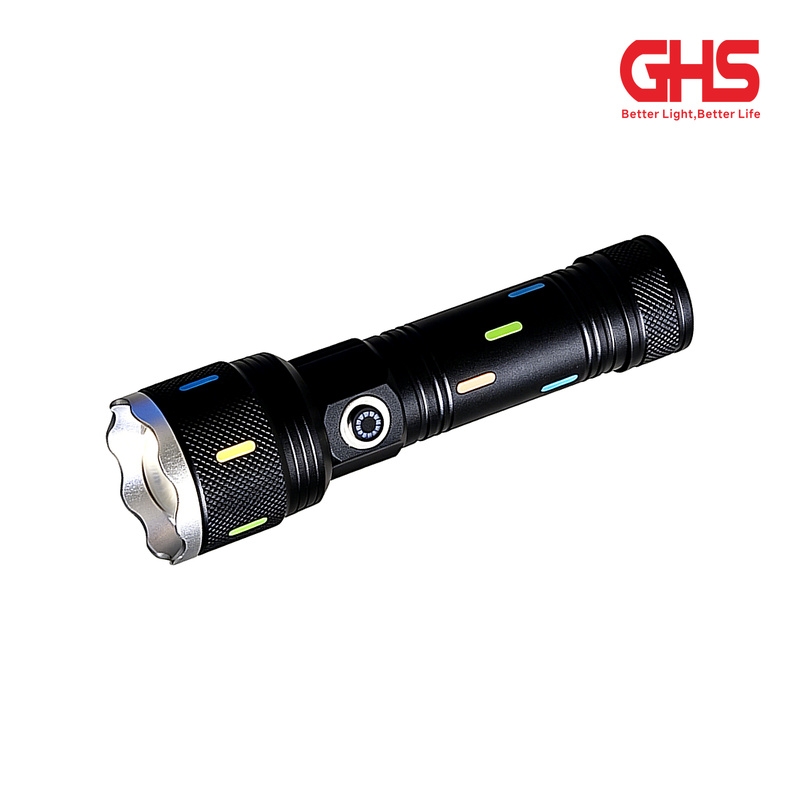
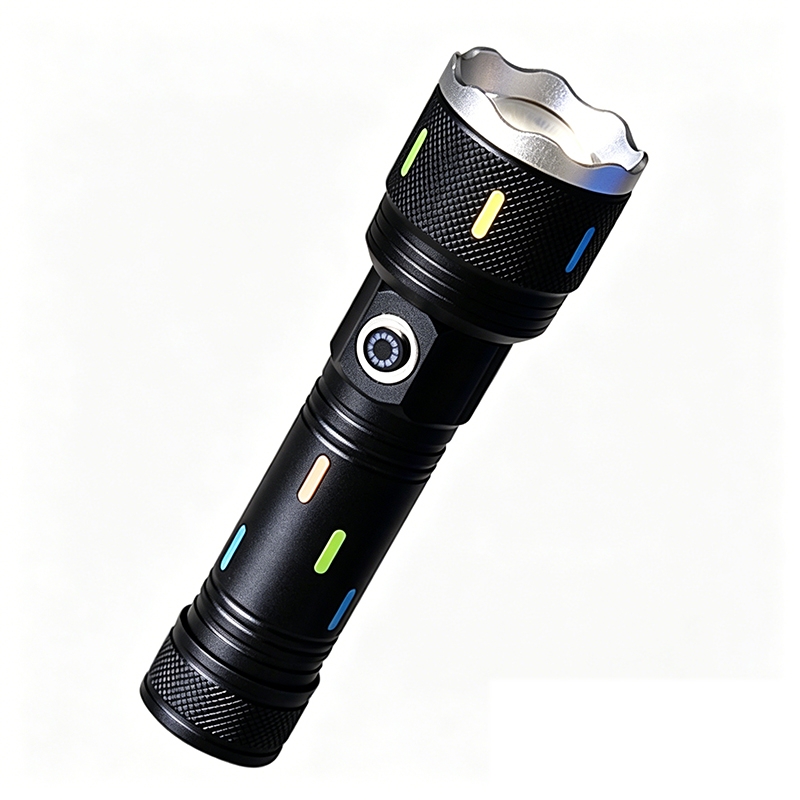
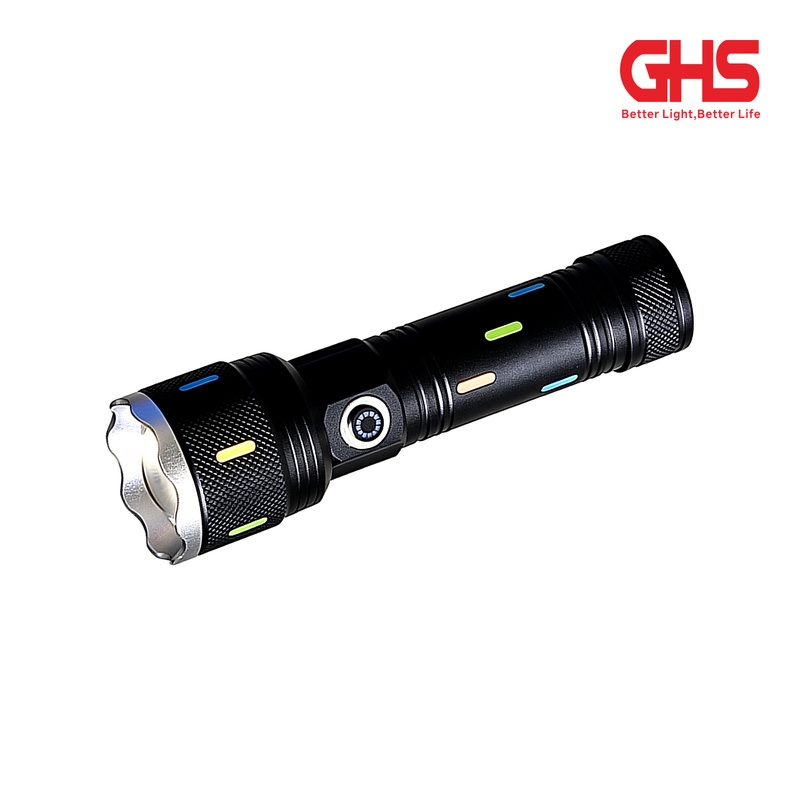
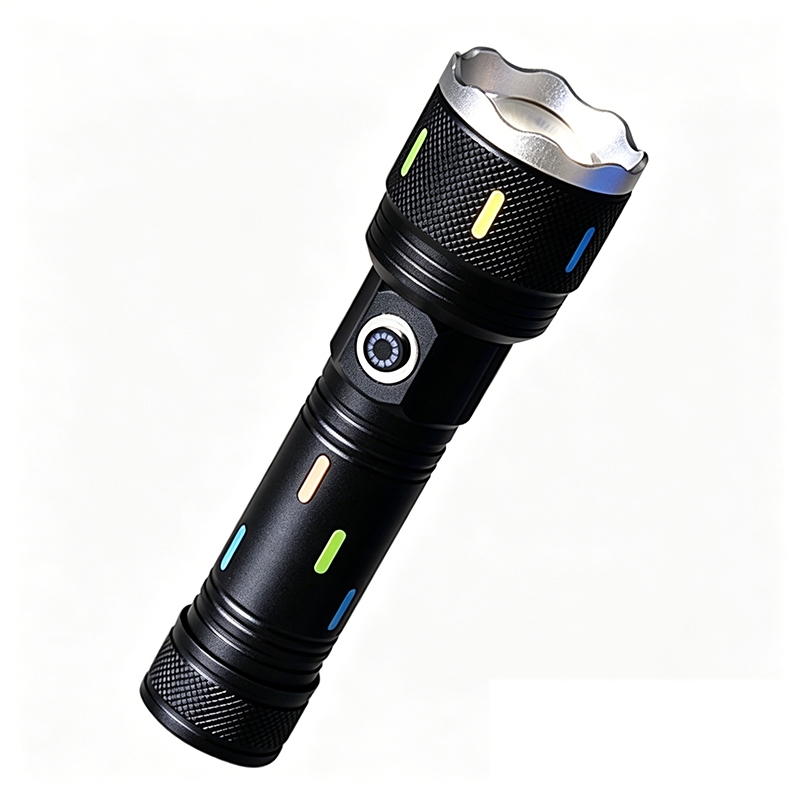
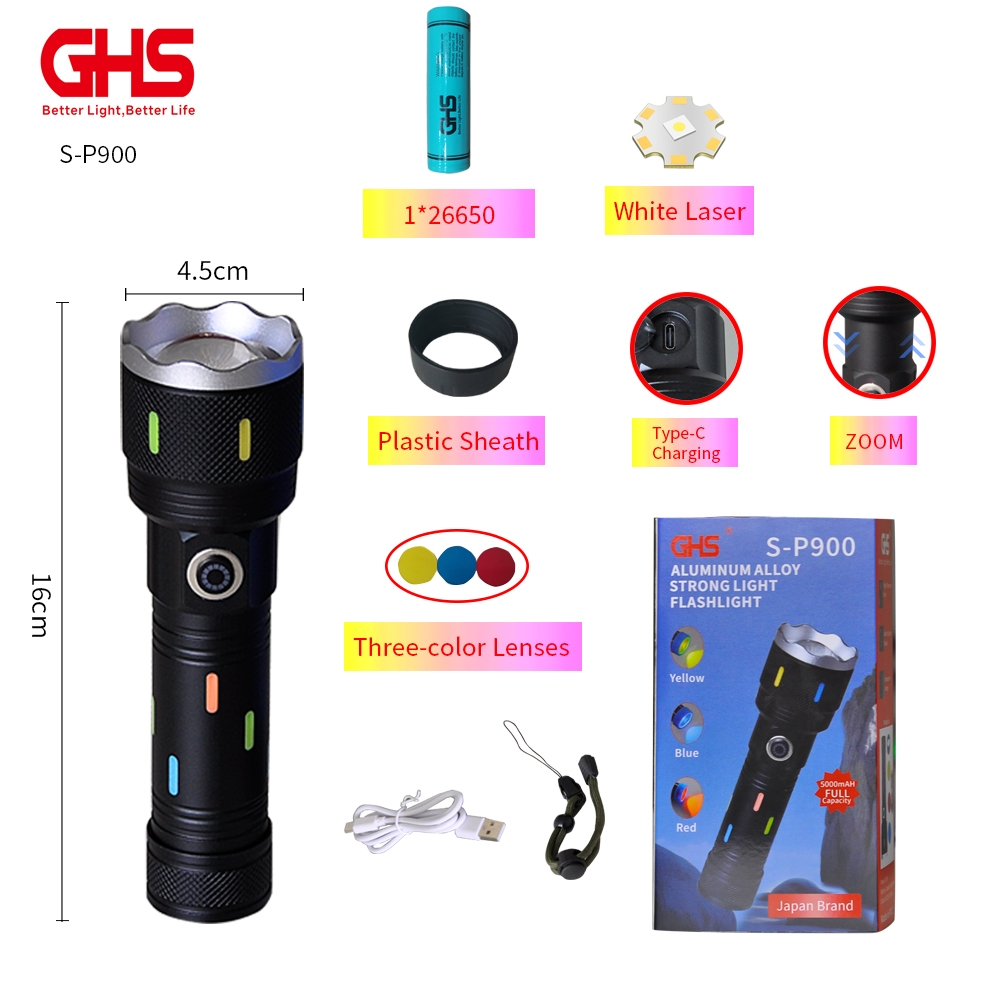
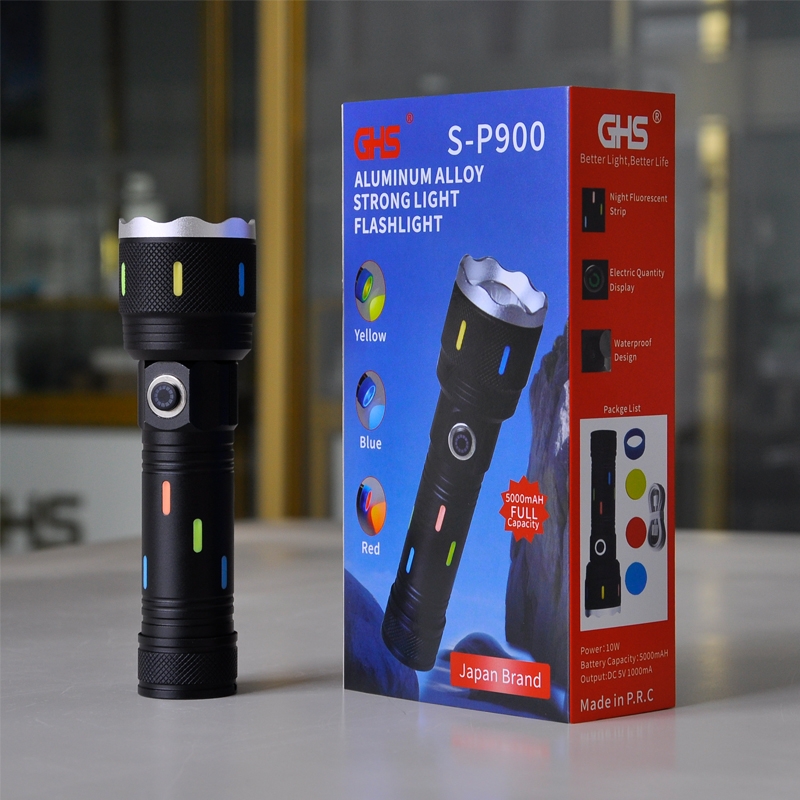
This model, marked S-P900 / S-900 on the visible product and packaging, is a handheld flashlight with a cylindrical aluminum-alloy style body, a front lamp head, and a rear grip section. The body appears to use a black anodized-looking finish with silver metal accents at the bezel. Textured rings and knurled sections are visible near the head and grip areas, which usually improve hold stability during outdoor use or when wearing gloves.
The product images also show a side-mounted circular button or switch near the center of the body. That layout suggests straightforward mode control or power activation. In addition, the packaging indicates several features, including a battery capacity display, a night fluorescent strip, and a waterproof design. Because these details come from packaging graphics, they should be treated as product-level claims on the box rather than independently verified performance data.
Visible Specifications and Functional Cues
Form factor and construction
The flashlight follows a classic handheld torch geometry: larger lamp head, narrower handle, and a compact straight-body profile. This format is common in utility lighting because it balances beam direction, grip comfort, and storage convenience. The metal housing appears durable and machine-finished, which is useful for buyers who need a tool that can be kept in a vehicle, toolkit, or emergency drawer.
Beam behavior
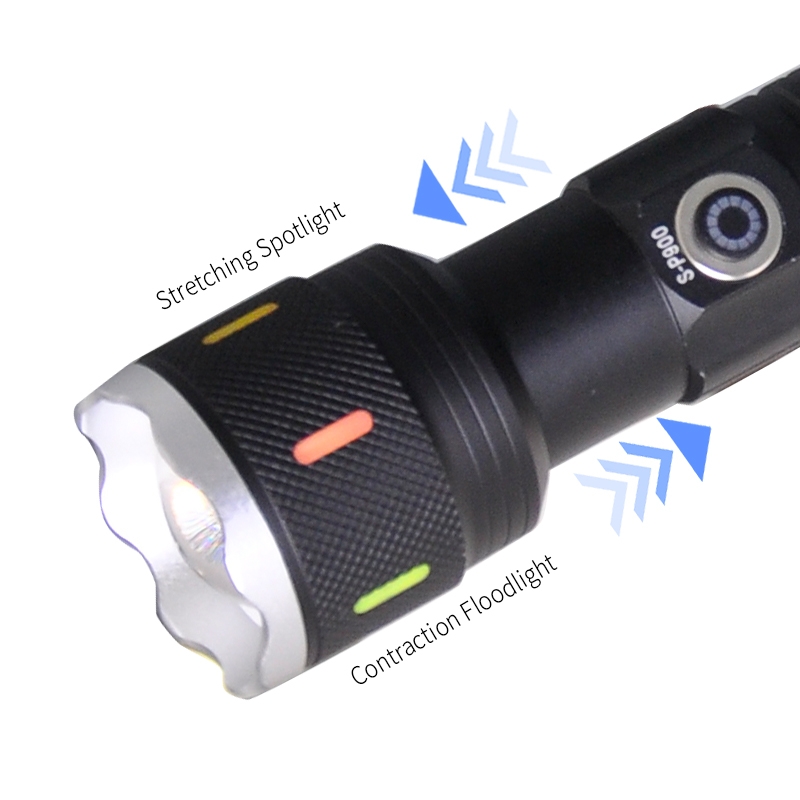
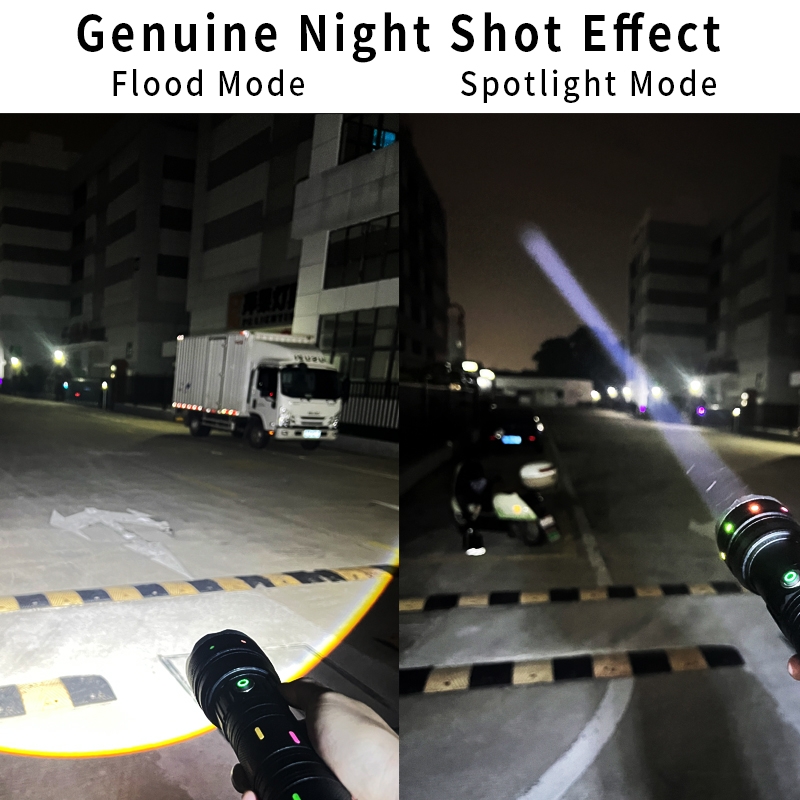
The visible labeling indicates an adjustable beam concept, described as “Stretching Spotlight” and “Contraction Floodlight.” That suggests the flashlight is intended to shift between a tighter spot beam and a wider flood pattern. A zoom LED flashlight is often chosen for this reason: a focused beam can help with inspection or distance viewing, while a wider beam is better for walking paths, campsite tasks, or general area lighting. The exact optical mechanism is not fully visible, so the beam-adjustment method should not be overdescribed.
Controls and user interface
The side switch is an important practical detail. Side-mounted controls can make one-handed operation easier than tail-only designs, especially when the light is used repeatedly during work shifts or household checks. The visible switch placement also leaves the rear end cleaner for grip and pocket carry.
Materials and Finish Options
Based on the visible surface and structure, the housing is likely made from aluminum alloy or a similar metal suitable for machined flashlight bodies. The black finish appears anodized or anodized-looking, a common choice for portable lighting because it helps protect the surface and gives the product a professional, low-glare appearance. Silver-toned accents at the head add contrast and may indicate the front bezel, reflector edge, or a separate metal component.
Textured grip zones are visible on both the head and body sections. These rings matter in real use because they reduce slipping from moisture, sweat, or gloves. The small colored inserts along the body may be decorative, indicator-related, or part of a design language; their exact function is not confirmed, so they should be treated carefully when specifying the product.
Manufacturing and Assembly Notes
As a product category, this flashlight combines several production steps: body machining or turning, surface finishing, LED module integration, switch assembly, lens or reflector installation, and final packaging. A metal flashlight housing typically requires dimensional consistency so that the head, battery chamber, and switch area align correctly. Surface finishing also matters because it affects appearance, grip, and resistance to visible wear.
For B2B buyers, this matters because the product is not just a light source; it is a multi-part electromechanical assembly. A flashlight supplier must manage the fit between the housing and the lighting module, the sealing interfaces, and the retail presentation. If you are sourcing a LED flashlight supplier, it is useful to ask for confirmation of body material, finish process, battery system, charging details, and testing documents tied to your target market.
Packaging Claims and Buyer-Relevant Information
The visible box graphics list model S-P900 and state “Aluminum alloy strong light flashlight.” Additional text on the packaging includes “Battery Capacity: 5000mAh,” “Power: 10W,” and “DC 5V 1000mA.” The packaging also mentions an electric quantity display, waterproof design, and night fluorescent strip. These are useful reference points for product comparison, but they should be validated against the actual sample if you are planning procurement or catalog publishing.
One packaging detail that is especially important for purchasing teams is the battery-capacity claim. Capacity and charging behavior can strongly affect how the flashlight fits a use case such as emergency kits, patrol work, or weekend camping. Still, the exact battery chemistry, runtime, charging interface, and actual waterproof rating are not visible here and should be confirmed before publication or bulk ordering.
Typical Application Scenarios
This rechargeable LED flashlight fits a broad set of use cases where portability and directed light are more important than large size. Common scenarios include walking at night, home power outages, garage checks, roadside visibility, and maintenance work. In outdoor use, the adjustable beam concept can support both close-range tasks and farther illumination. In inspection settings, a compact beam is often easier to aim into equipment cavities, storage spaces, or dark corners.
The product also suits general everyday carry for households, security staff, field technicians, and campers. Because the housing appears metal rather than plastic, buyers may see it as a better fit for repeated handling and utility-oriented use. For a compact torch, that can be more valuable than decorative styling.
Quality Control Considerations
When evaluating a flashlight for procurement, quality control should cover more than visual appearance. The housing finish should be checked for burrs, coating uniformity, and thread alignment. The switch should feel consistent and not wobble excessively. If the product is sold as rechargeable, the charging and battery subsystem should be tested for stable performance and proper packaging of accessories.
Because the packaging mentions waterproof design, buyers should request the exact verification method rather than assuming a specific IP rating. Likewise, if the electric quantity display is important to the market, it should be checked for readability and accuracy in normal lighting. For a zoom LED flashlight, the moving or adjustable front section should be tested for smooth operation and repeatable beam transition without looseness.
Customization and Sourcing Guidance
For OEM or private-label projects, this style of flashlight offers several customization points: body color, logo marking, packaging artwork, accessory set, and feature emphasis. Buyers can also clarify whether the product should prioritize battery-capacity messaging, beam adjustment, or general emergency use positioning. If the product is intended for retail shelves, the box should present the core functions plainly and avoid ambiguous claims that are not backed by samples.
When working with a LED flashlight supplier, ask for sample confirmation on the following before finalizing orders: actual battery configuration, charging cable type, beam-adjustment behavior, included accessories, and market-specific compliance needs. If your channel requires performance documentation, request test reports for electrical safety, waterproof claims, and runtime claims as applicable. That approach reduces return risk and improves catalog accuracy.
How Buyers Can Decide if This Model Fits
This flashlight is a good match if you need a compact metal torch with a side switch, a grip-friendly body, and a visible focus-shift concept between spot and flood. It is also suitable if your buyers prefer a rechargeable format over disposable batteries. The product may be less suitable if your specification requires verified lumen output, a certified IP rating, or an exact charging standard that is not stated in the supplied material.
In short, the strongest buying arguments here are the handheld aluminum-like construction, the adjustable beam concept, the rechargeable positioning on the packaging, and the straightforward form factor. Those features are practical, easy to explain, and relevant across consumer, maintenance, and emergency-lighting channels.
Request Samples and Confirm Specifications
If you are sourcing this rechargeable LED flashlight for retail, OEM, or project supply, the next step is to confirm the sample details that matter to your market. Ask for full specification sheets, accessory confirmation, and packaging proof before placing a bulk order. For questions about branding, configuration, or market positioning, contact your LED flashlight supplier and request a sample review based on the S-P900 model.