
Rechargeable LED Flashlight Overview
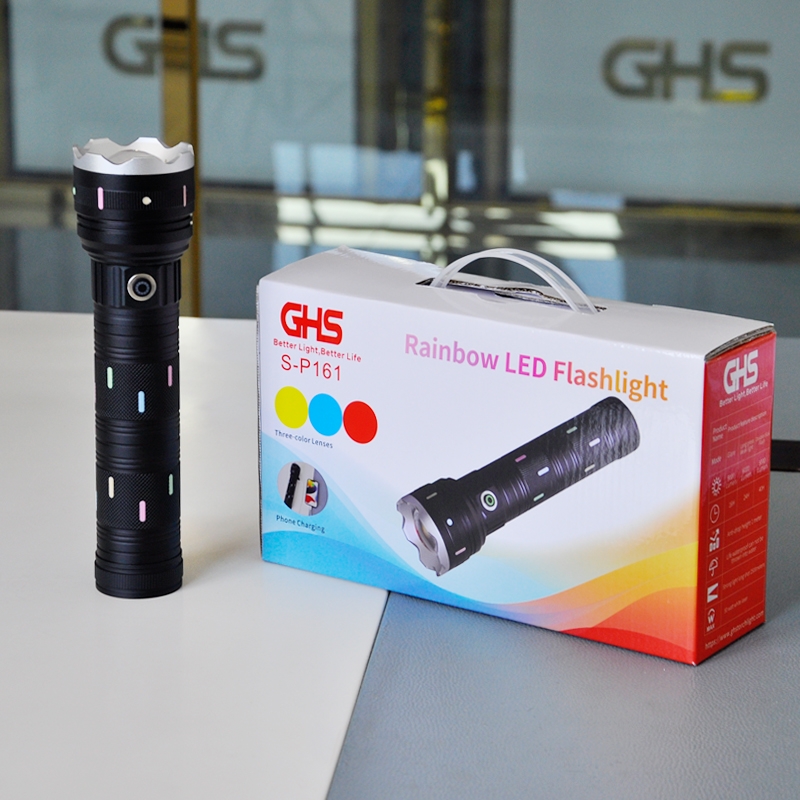
A rechargeable LED flashlight is a practical answer for buyers who need portable light without relying on disposable batteries. For households, field crews, security teams, and outdoor users, the main problem is simple: light must be available when power is limited, tools are being carried, or visibility changes from close work to longer-range inspection. The product described here is a handheld, cylindrical flashlight with a metal-looking body, textured grip areas, a side switch, and an adjustable beam function that can shift between narrow spotlight and wider floodlight use. That makes it suitable for tasks where one fixed beam is not enough.
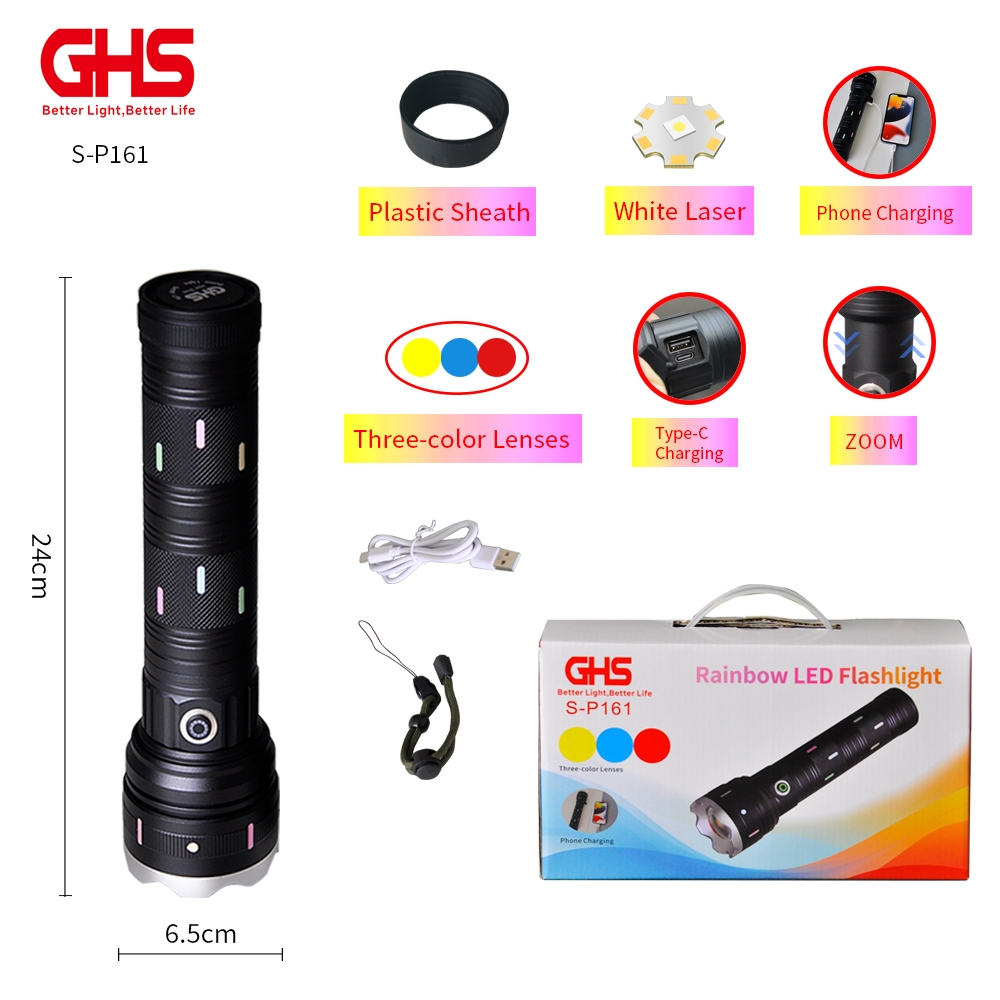
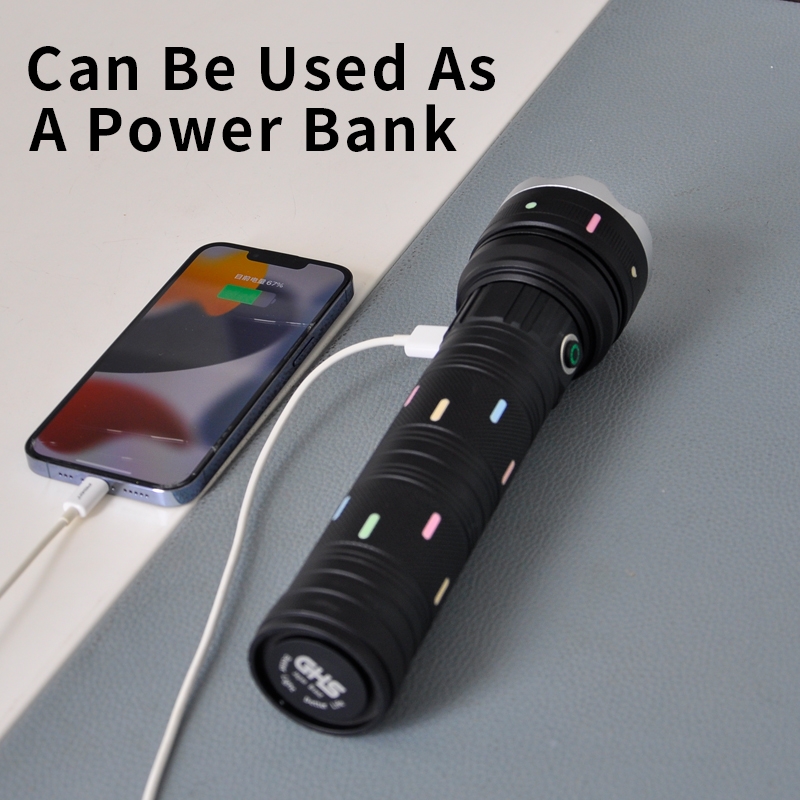
Based on the provided product details, this flashlight family also includes a version with built-in rechargeable power and a USB output function that can serve as a backup charger for a phone. That combination is useful in emergency kits, vehicles, travel bags, and power outage planning, where a single device may need to provide both illumination and limited backup power.
Product Structure and Working Concept
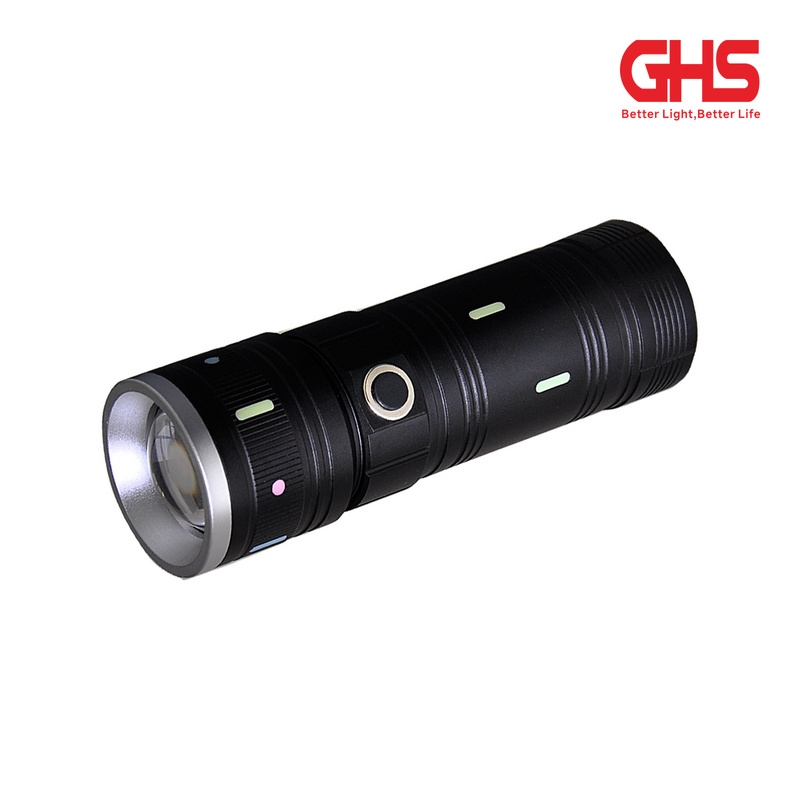
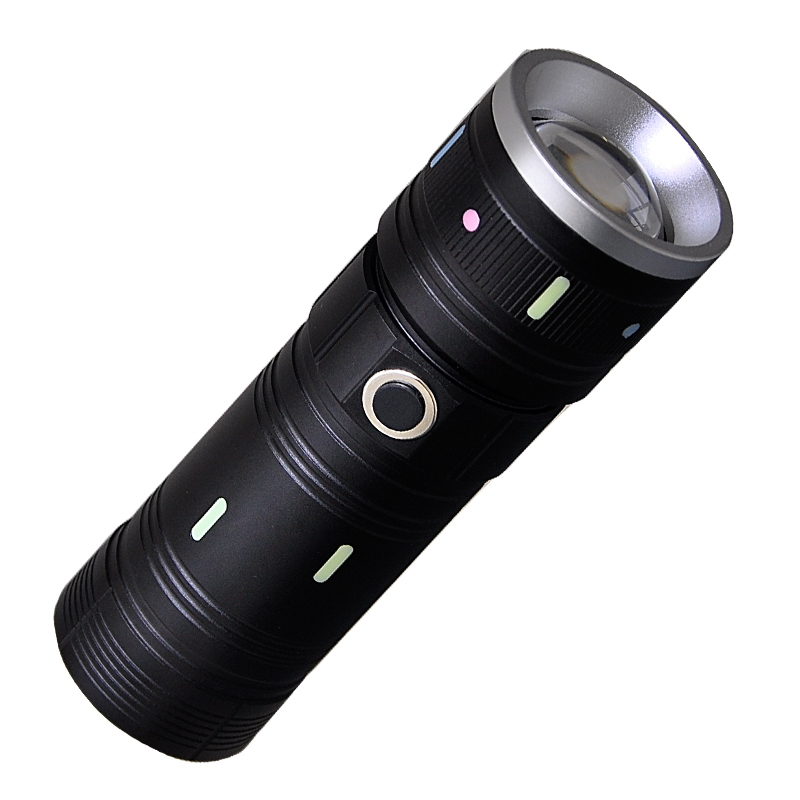
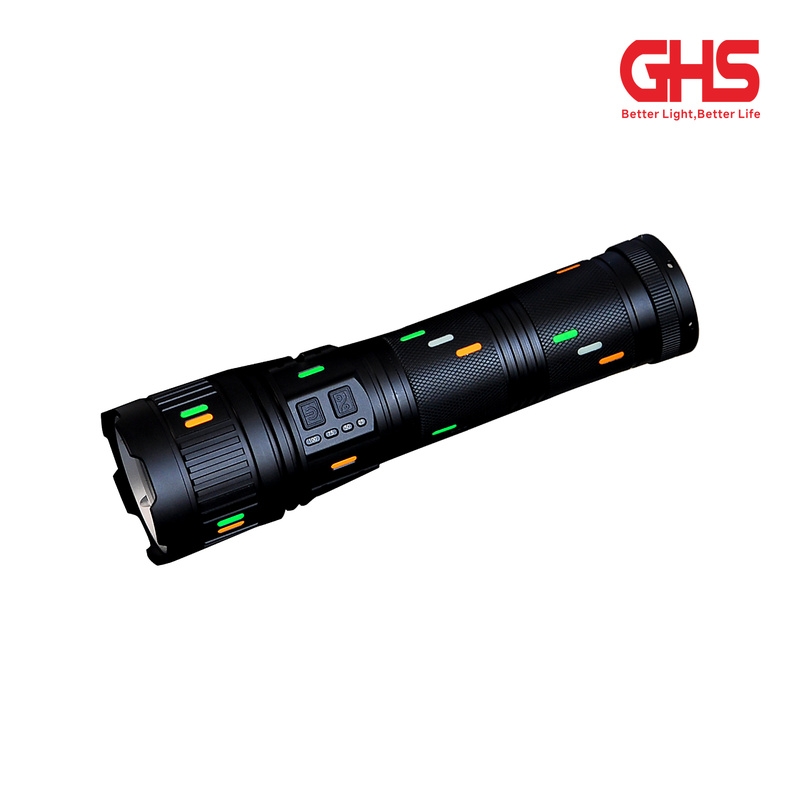
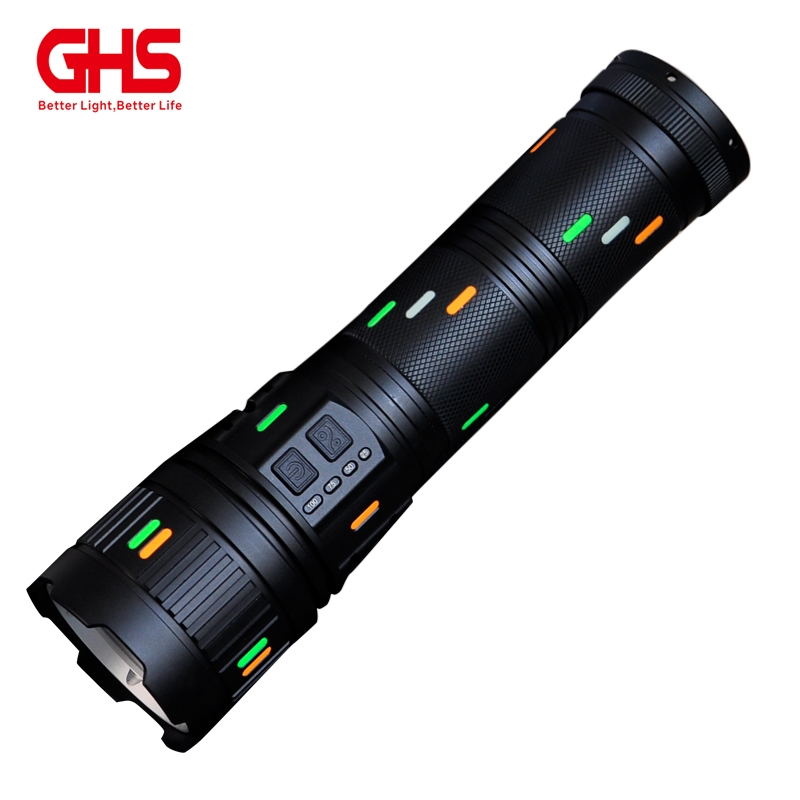
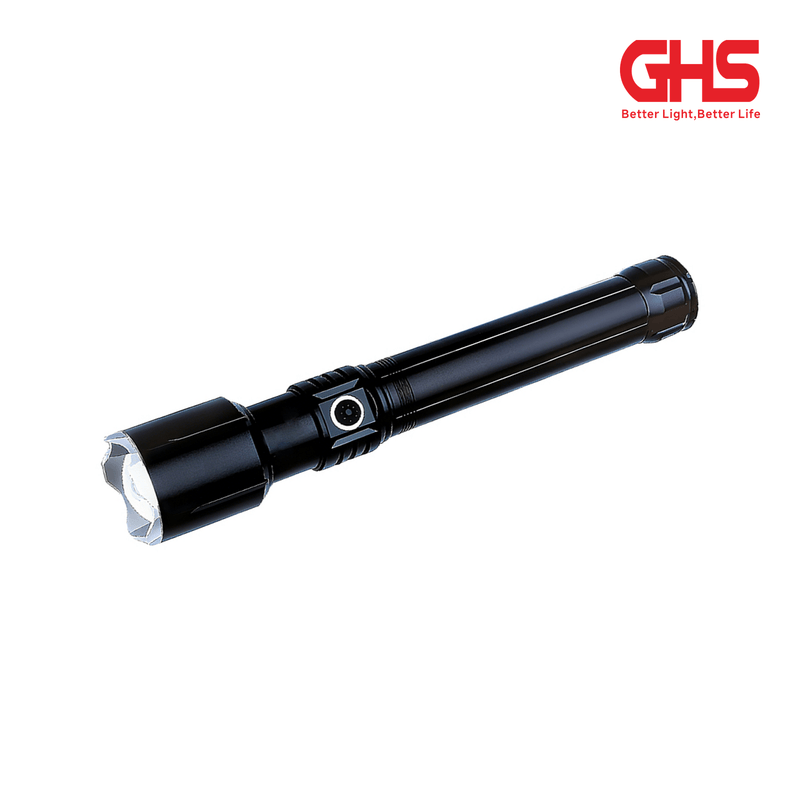
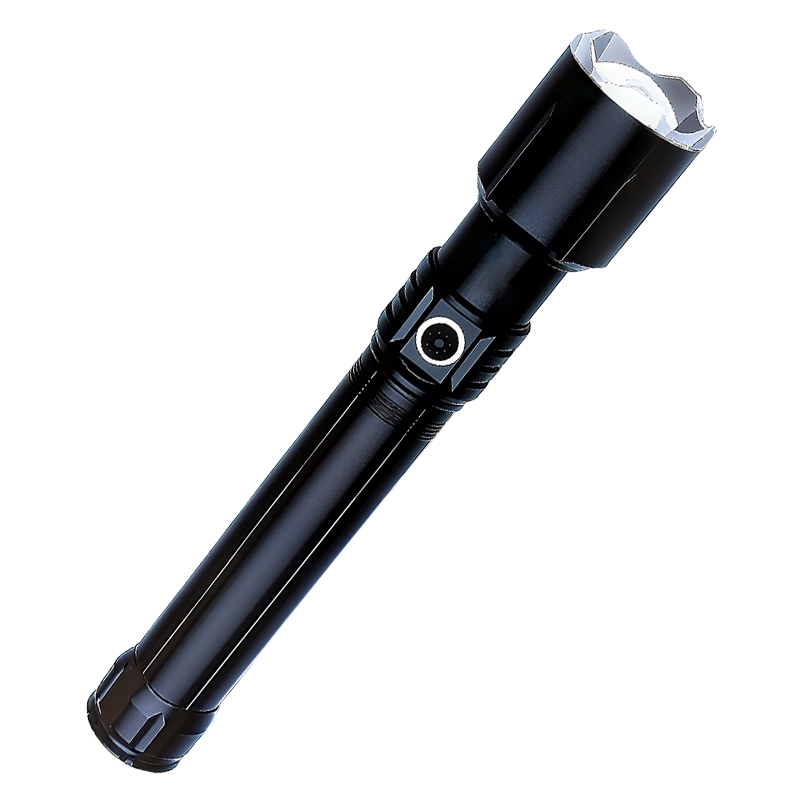
The flashlight uses a long tube-style handheld form factor with a slightly wider head and tail cap. Visible design elements include a black matte or anodized-looking exterior, knurled grip sections for better handling, a metallic-looking bezel at the front, and a side button or control near the head. Those features suggest a product designed for one-handed operation and grip security, even with gloves or in wet working conditions, although actual slip resistance has not been tested here.
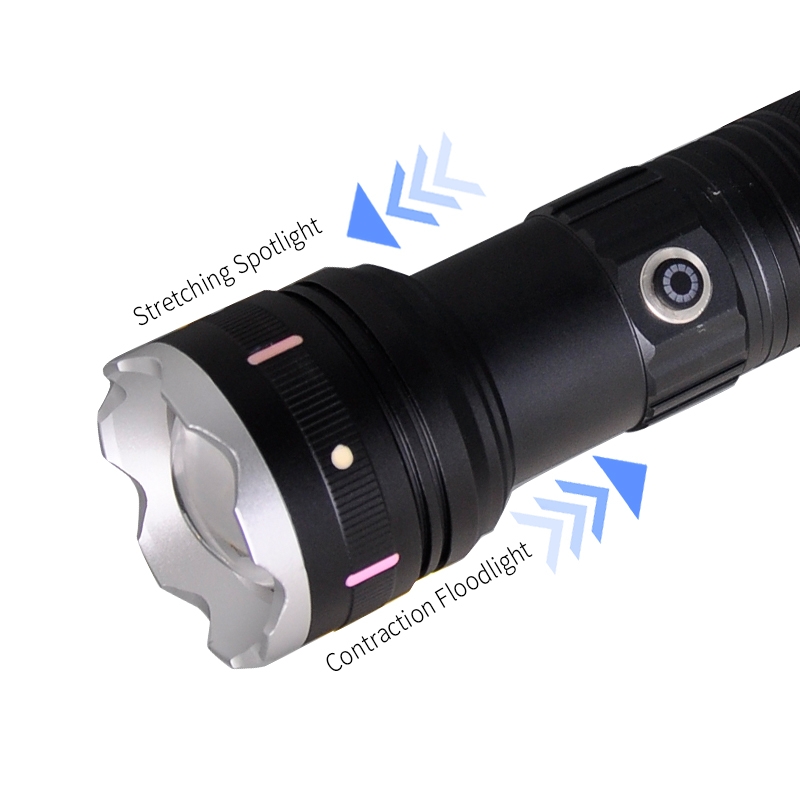
One visible function label indicates beam adjustment: “Stretching Spotlight” and “Contraction Floodlight.” In practical terms, that means the head likely slides or extends to change the beam pattern. A focused spotlight is useful for seeing objects farther away or identifying details at a distance, while a floodlight spreads illumination over a wider area for walking, repair work, campsite use, or checking equipment.
Key visible capabilities
From the supplied data, the main verifiable features are compact handheld size, side-control operation, a durable-looking cylindrical metal body, ergonomic grip texture, and adjustable beam behavior. For the rechargeable model, the visible setup also shows a charging cable connected to a smartphone, indicating power-bank use through a USB interface.
Specifications and Capability Notes
Several technical values are not provided and should not be assumed, including lumen output, beam distance, battery capacity, runtime, charging speed, waterproof rating, and impact resistance. For B2B buyers, that means the flashlight should be evaluated by its physical structure, beam adjustment method, power system, and service fit rather than by unverified performance claims.
What can be used as reference points is the overall construction style: a small-format portable torch, likely built around a metal housing and optical lens assembly. The presence of a side switch suggests convenient mode control, while the wider head indicates room for an LED optic or focus mechanism. If your project requires a simple utility light, a zoom LED flashlight style product often offers more flexibility than a fixed-beam torch.
Typical selection factors
Buyers usually compare this category by beam adjustability, charging method, body material, grip comfort, and whether the unit can also function as an emergency power source. In field use, these details matter more than appearance alone. A flashlight for inspection work may need a concentrated beam and easy one-hand operation, while a camping or household emergency light may benefit from wider flood coverage and rechargeable convenience.
Materials and Finish Options
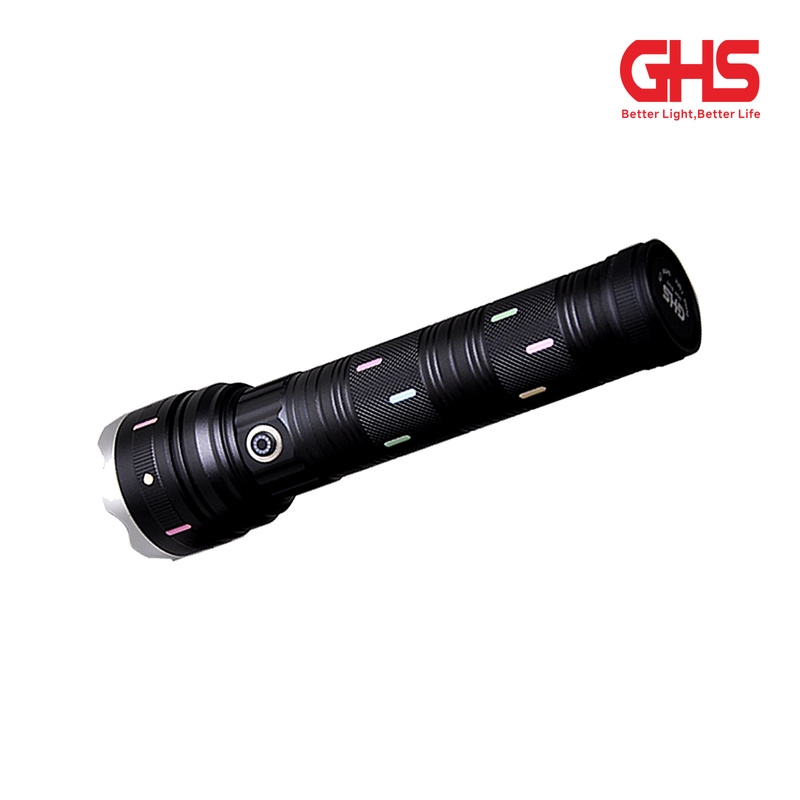
The visible product appears to use a black body with a matte or anodized-looking finish and a silver-toned front bezel. The grip area is textured with knurling or ribbing, which improves handling and gives the housing a more industrial feel. The body may be aluminum alloy or another metal-based construction, though the exact material is not confirmed. A rechargeable variant could also include molded plastic components around internal electronics or the charging port.
For buyers sourcing from an LED flashlight supplier, finish selection is often as important as internal function. Common considerations include a matte black appearance for tactical or professional use, surface treatment that resists visible wear, and color accents or indicator markings that support branding or mode identification. The provided product image also shows small multicolor marks on the barrel, though their purpose is not stated and should not be interpreted as a functional rating indicator without confirmation.
Manufacturing and Assembly Considerations
The flashlight is likely produced through a housing fabrication and electronics assembly workflow. For a metal-bodied version, the housing may be formed by CNC machining or extrusion, followed by surface finishing such as anodizing or similar treatment. The lens, bezel, switch, charging port, LED module, and battery would then be assembled into the body. Because the exact internal design is not visible, this should be treated as a likely manufacturing category rather than a confirmed process description.
From a procurement perspective, the most relevant manufacturing questions are whether the threads are smooth, whether the focus mechanism holds position, whether the side switch is consistent under repeated use, and whether the charging interface is protected from wear. If the flashlight includes a power-bank function, electronic protection and battery safety design become especially important.
Application Scenarios
This product is suited to a broad set of utility uses. In homes, a rechargeable LED flashlight is useful during blackouts, fuse issues, and nighttime troubleshooting. In vehicles, it belongs in an emergency kit for roadside checks, tire changes, and breakdown support. For outdoor users, the adjustable beam helps with campsite movement, tent area lighting, and trail-side observation.
Security and inspection teams may value the focused beam for checking locks, panels, equipment labels, or perimeter areas. Maintenance staff can use the wider beam for closer-range tasks where both hands may be occupied. The power-bank version adds another layer of value during travel, long shifts, or emergency situations where a phone needs a small backup charge.
Where adjustable beam design helps most
An adjustable torch is especially helpful when work conditions change quickly. A narrow beam supports distance spotting and detail inspection, while a flood pattern covers a larger surface. That flexibility can reduce the need to carry separate lights for different tasks.
Quality Control and Buyer Checks
Because many key performance values are not visible in the image, buyers should focus on controllable quality points. These include housing consistency, switch feel, thread alignment, port fit, grip finish, and beam adjustment smoothness. If the flashlight is intended for resale or private-label programs, sample review should also cover cosmetic consistency, logo placement, and packaging suitability.
For rechargeable and power-bank versions, electrical verification is important. Buyers should ask for confirmation of charging behavior, battery protection features, and port compatibility. If a phone-charging function is required, it is also worth confirming which cable types and device categories are supported. Do not assume universal compatibility unless the supplier states it clearly.
Customization and Purchasing Guidance
When comparing models, start with the use case. For tactical or inspection work, beam focus, one-hand control, and body durability may matter most. For emergency kits and travel, charging convenience and backup power support may be more important. If your customer base values branding, check whether the body can accept logo printing, custom packaging, or finish variation.
Customization can also extend to color treatment, button style, lens configuration, and accessory packaging, depending on the manufacturer’s capabilities. Before placing a volume order, request clear confirmation of the product version, since the provided data describes more than one related flashlight configuration: a zoom-style model with spotlight/floodlight adjustment and a rechargeable version with power-bank function.
Why This Product Fits B2B Utility Lighting Needs
For distributors, wholesalers, and sourcing teams, this flashlight category sits at the intersection of portable lighting and practical emergency gear. It is compact enough for consumer resale, yet functional enough for worksite, vehicle, and preparedness channels. The adjustable beam concept broadens the use case, and the rechargeable design reduces dependence on disposable batteries.
If you are evaluating a product line for retail, gift, emergency supply, or field-service distribution, this format offers a straightforward mix of portability, manual control, and everyday usefulness. It is not a specialty lamp with hidden claims; rather, it is a versatile handheld tool that solves a common problem: getting reliable light where and when it is needed.
Contact for Sourcing Support
If you are looking for a rechargeable LED flashlight solution, or comparing options from an LED flashlight supplier, share your required beam style, housing preference, charging needs, and target application. That makes it easier to match the right flashlight version to your market and avoid buying a model that does not fit the job.