
Rechargeable LED Flashlight for Everyday and Emergency Use
A rechargeable LED flashlight solves a simple but important buyer problem: you need portable light that is ready when mains power is not available, and you do not want to keep replacing disposable batteries. For camping, roadside repair, home outages, inspection work, or security patrols, a rechargeable LED flashlight gives you a compact light source that can be charged again and used repeatedly. In the product shown here, the adjustable beam and USB charging features add another layer of practicality, especially for users who want both close-range flood lighting and focused distance spotting in one handheld tool.
Product Overview
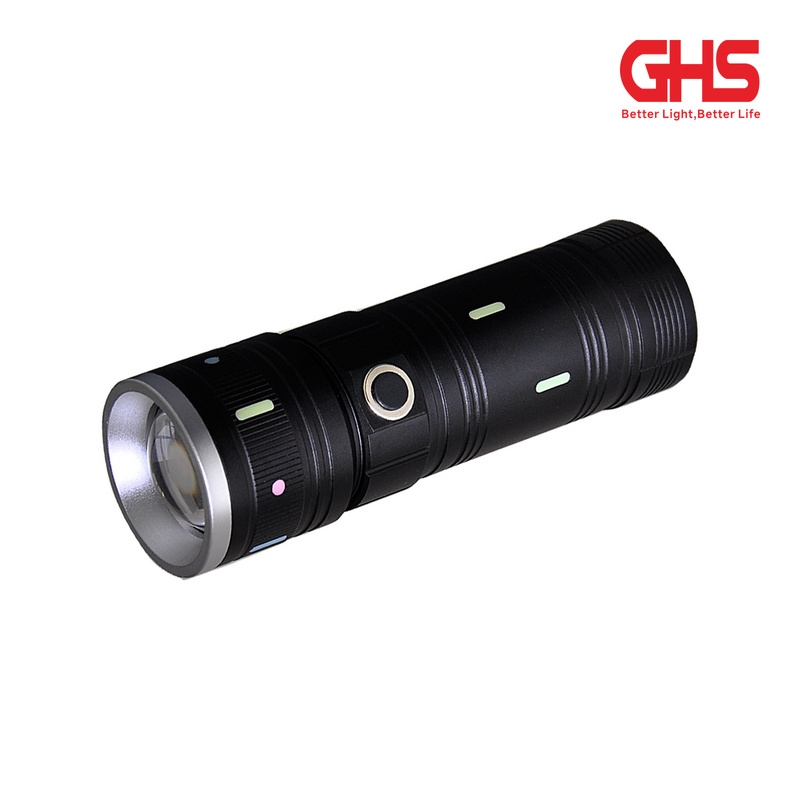
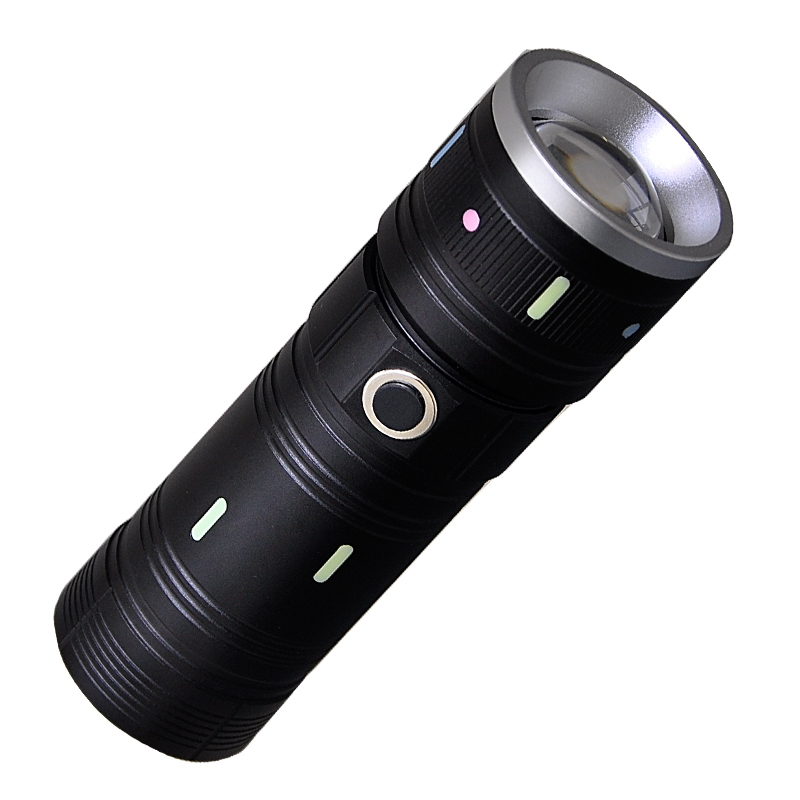
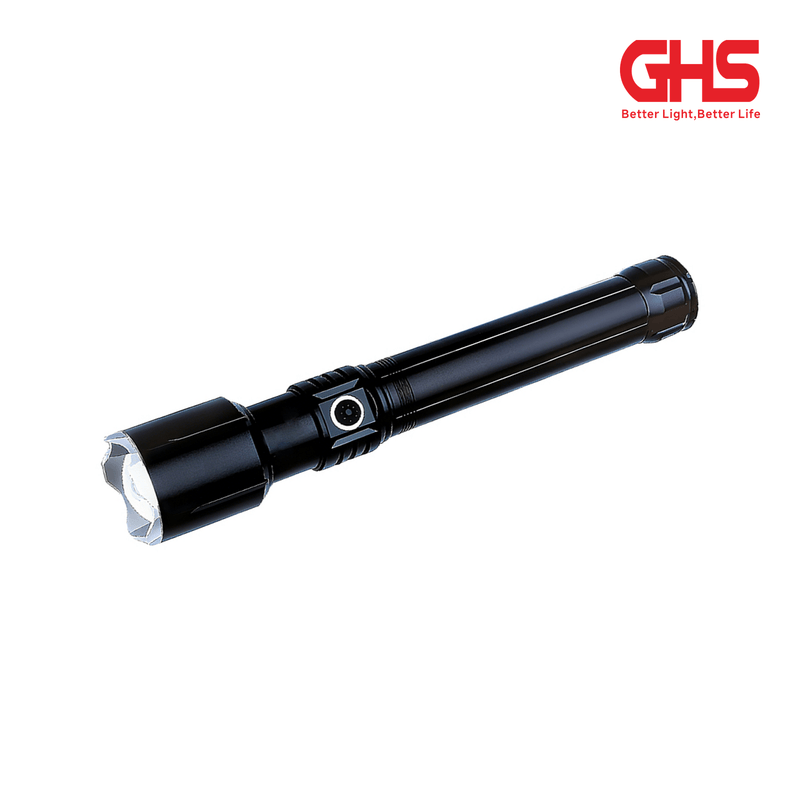
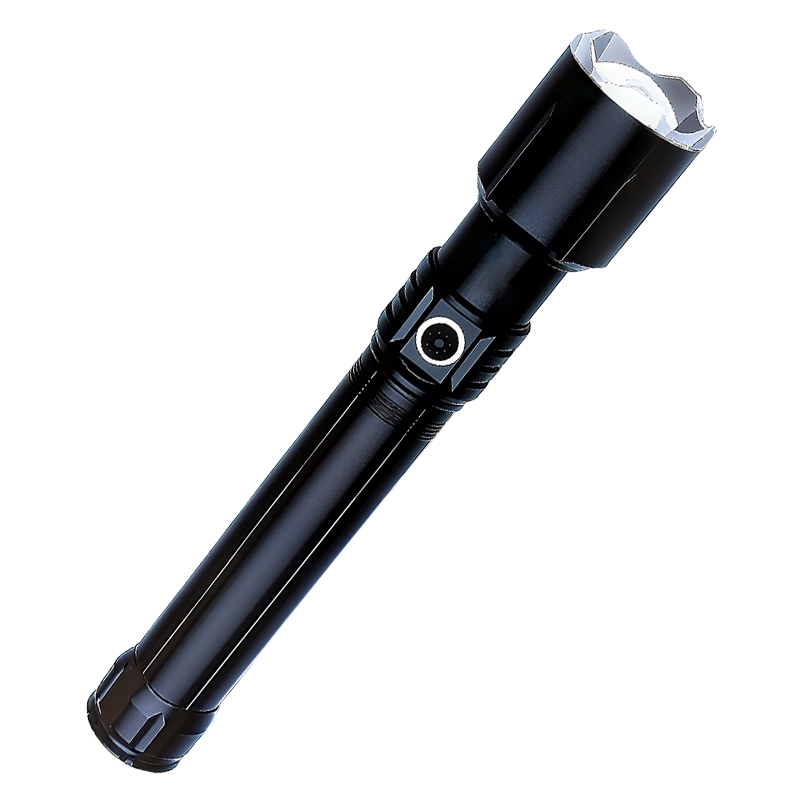
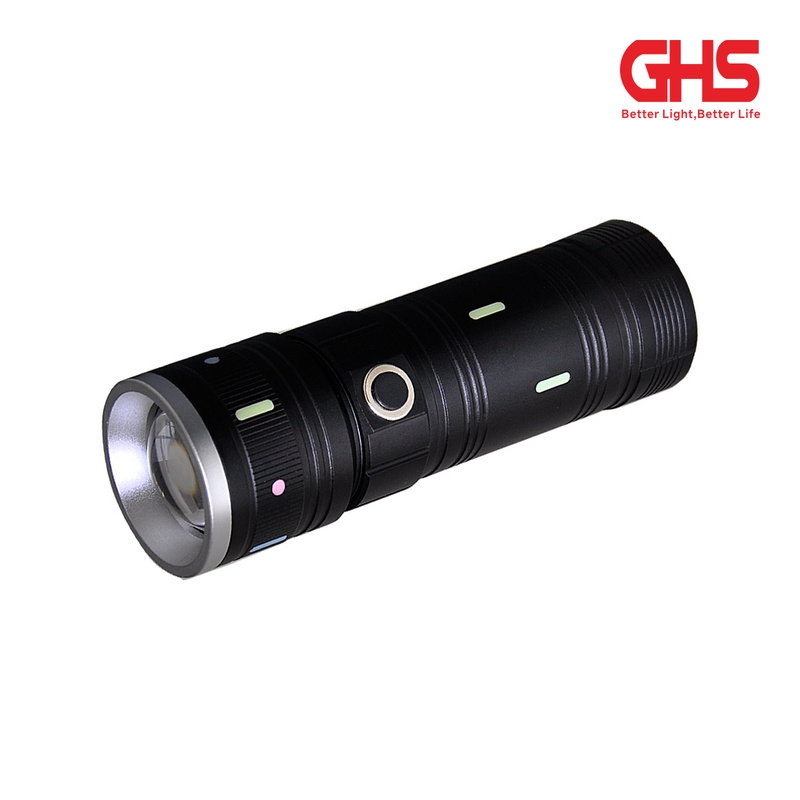
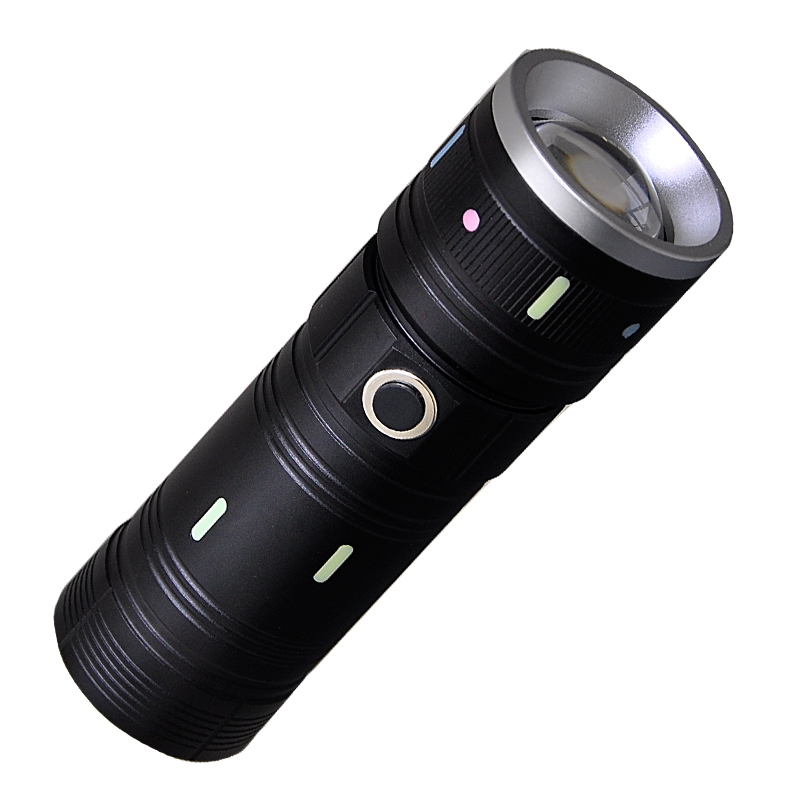
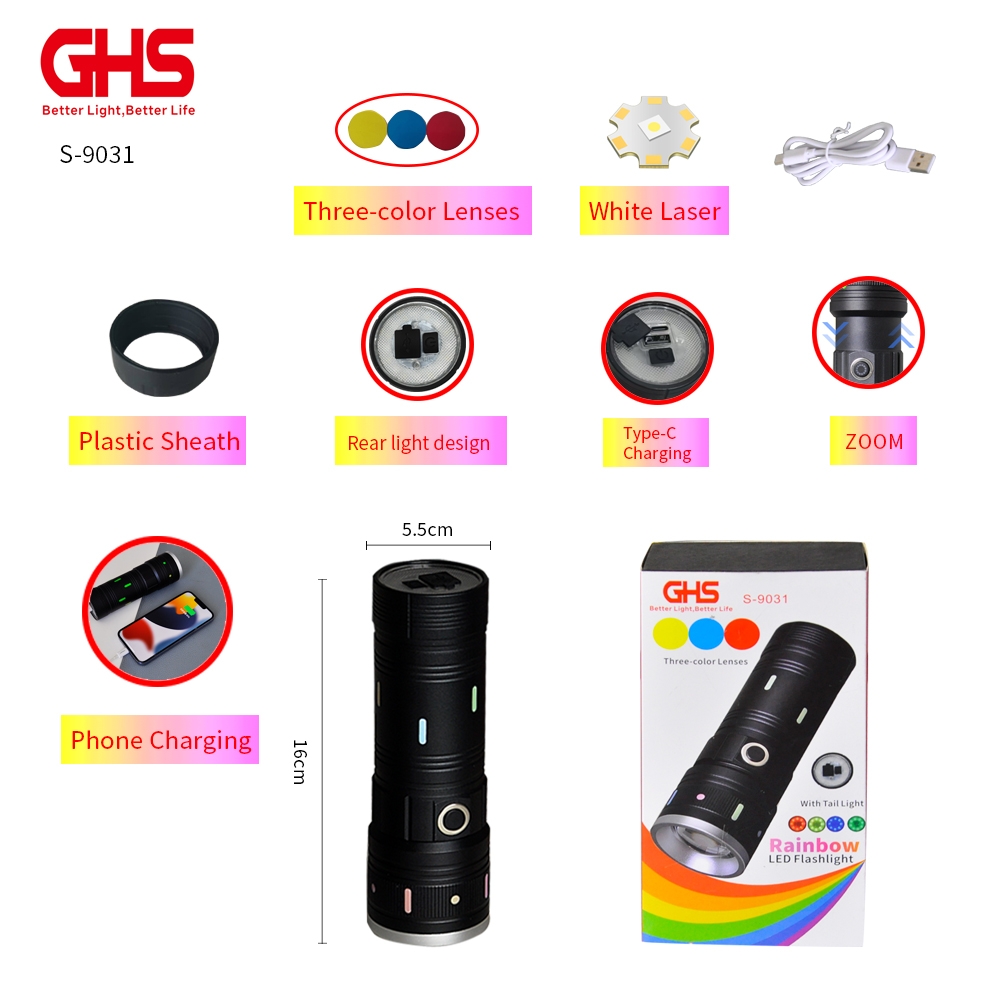
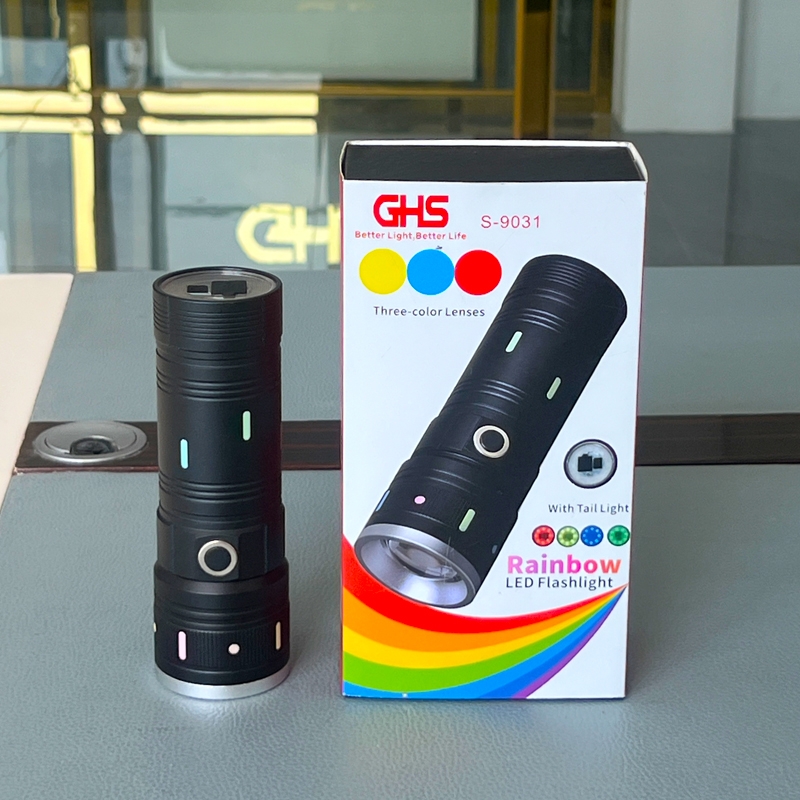
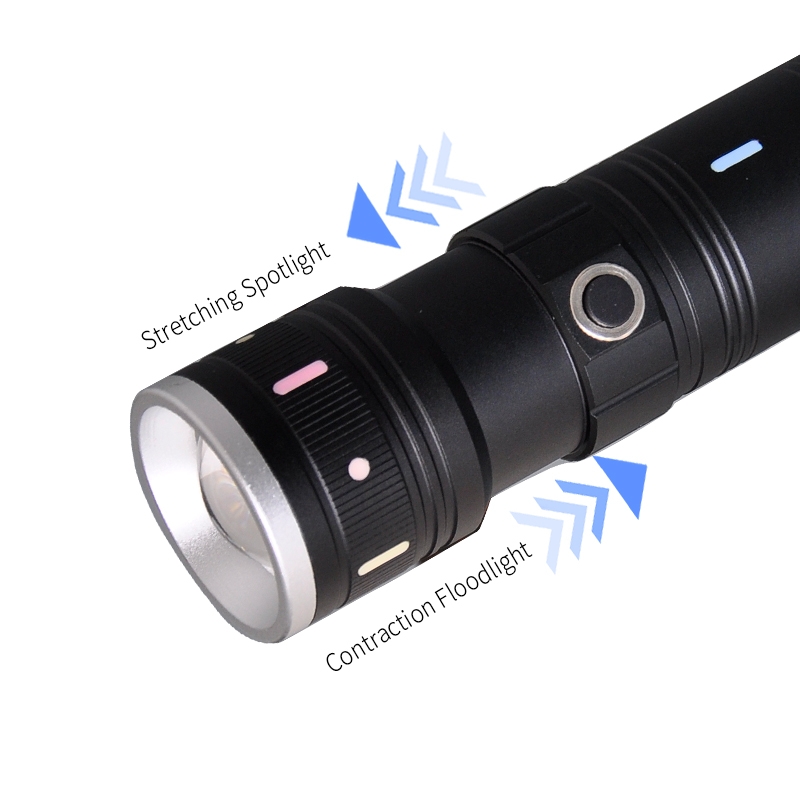
This handheld torch follows the familiar cylindrical flashlight format, with a larger head section, a narrower body, and a side switch for operation. The visible design suggests a metal-looking body with a matte or semi-matte black finish, grip-enhancing grooves, and a silver-colored bezel around the lens. The focus system appears to support beam adjustment, allowing the light to switch between a narrower spot and a wider flood pattern. That makes it suitable not only for walking light or general household use, but also for tasks that require different illumination spreads in a single device.
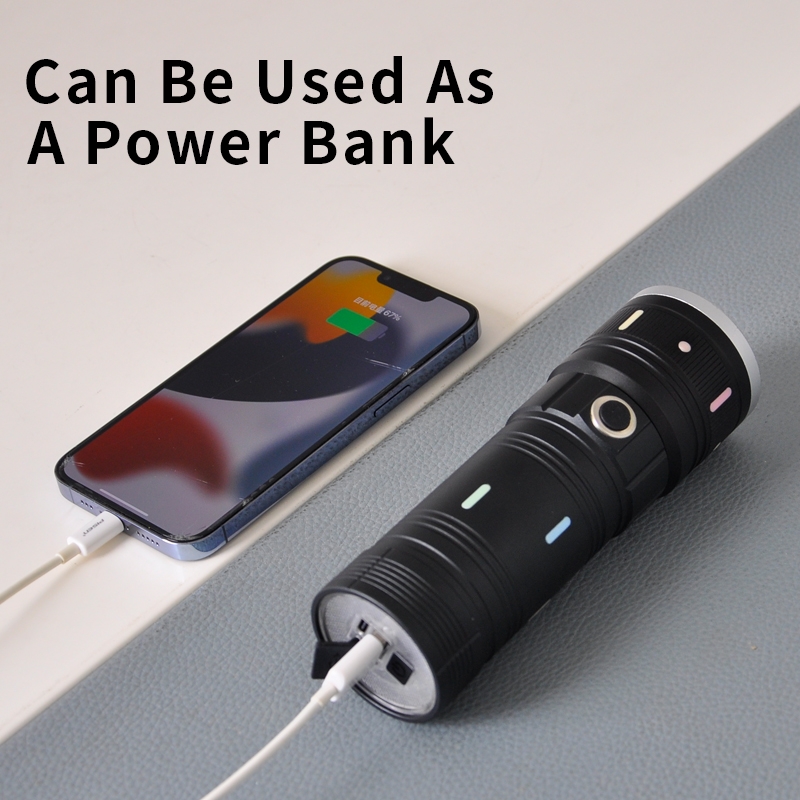
Depending on the version, the product information indicates a compact model around 16 cm in length and 5.5 cm in diameter, with USB Type-C charging shown on the packaging. Some image notes also suggest a rear light function and possible power bank capability. Because these details come from visible product images, they should be treated as claims to confirm rather than assumptions. Still, even the confirmed visual features already point to a versatile handheld light for daily carry and emergency preparation.
Key Capabilities and Functional Features
Adjustable beam pattern
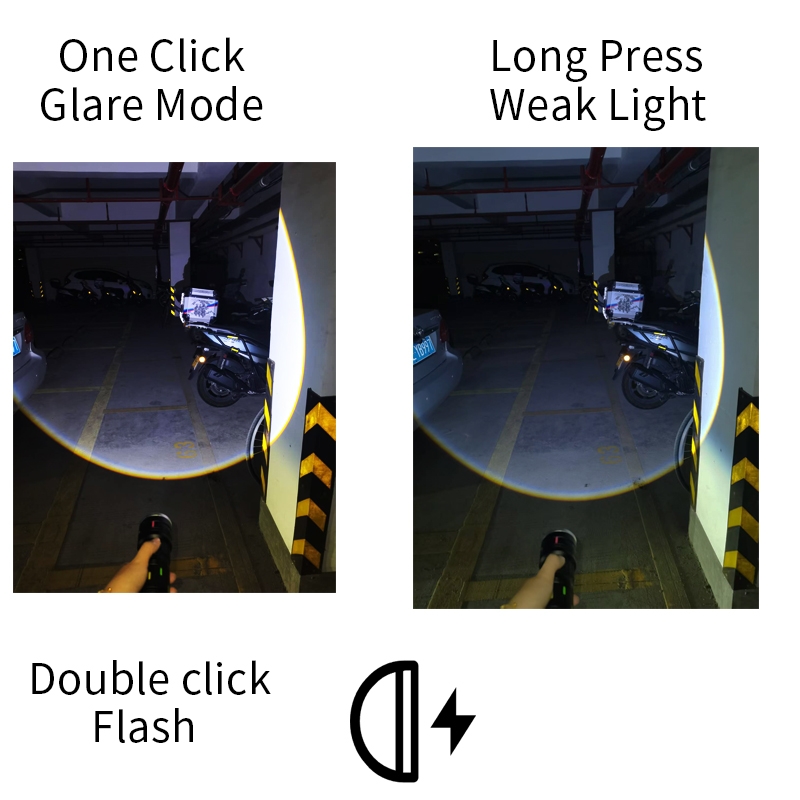
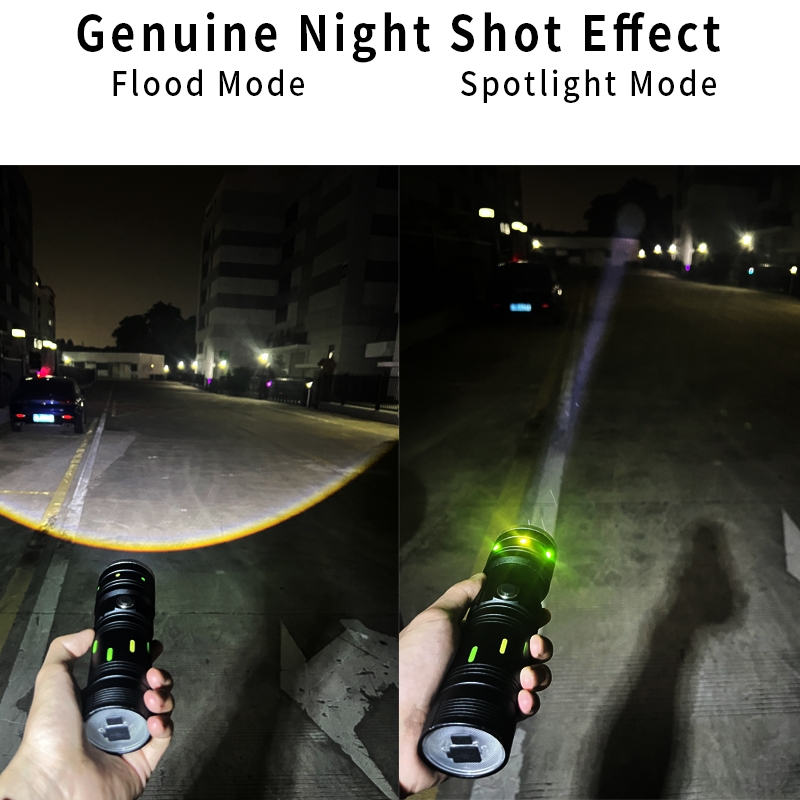
The most obvious function is the zoom mechanism. The flashlight can be set to a tighter spotlight for viewing farther objects or a wider floodlight for illuminating a larger nearby area. This kind of beam control is useful in practical settings where one fixed beam shape is not enough.
For example, a tight beam helps when checking a path, looking across a yard, or inspecting hardware in the distance. A wider beam is more comfortable for tent use, car interiors, storage rooms, and short-range maintenance work. A zoom LED flashlight is often preferred because users can move between those tasks without switching tools.
Portable handheld format
The compact tubular body is easy to hold, store, and carry in a vehicle, backpack, tool drawer, or emergency kit. The side-mounted switch is positioned for quick access, which matters when the user is working in low light or wearing gloves. The body shape also suggests a stable grip, with machined or molded surface detailing that helps reduce slipping.
USB charging convenience
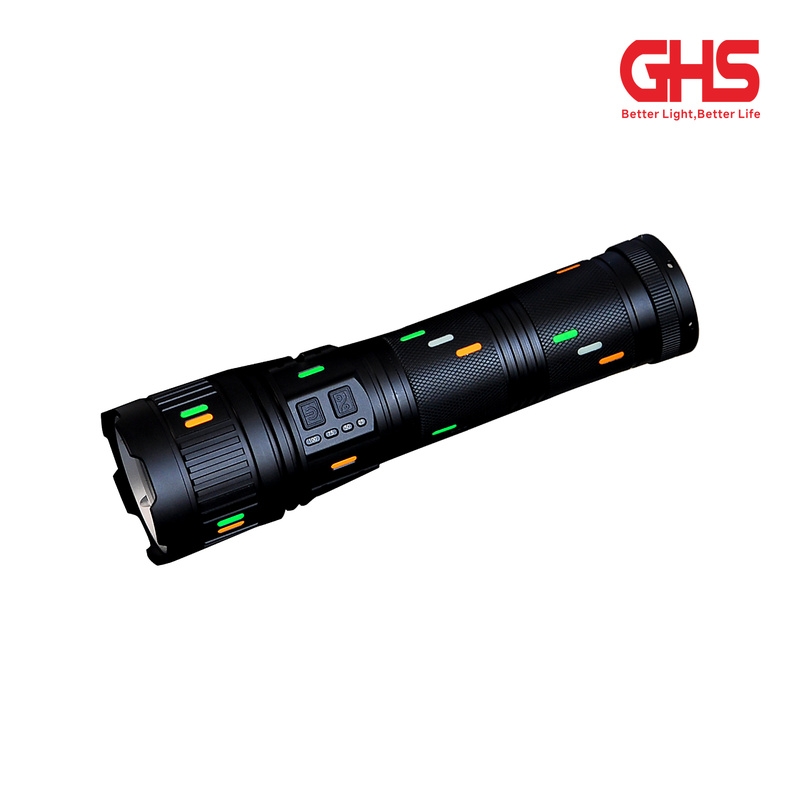
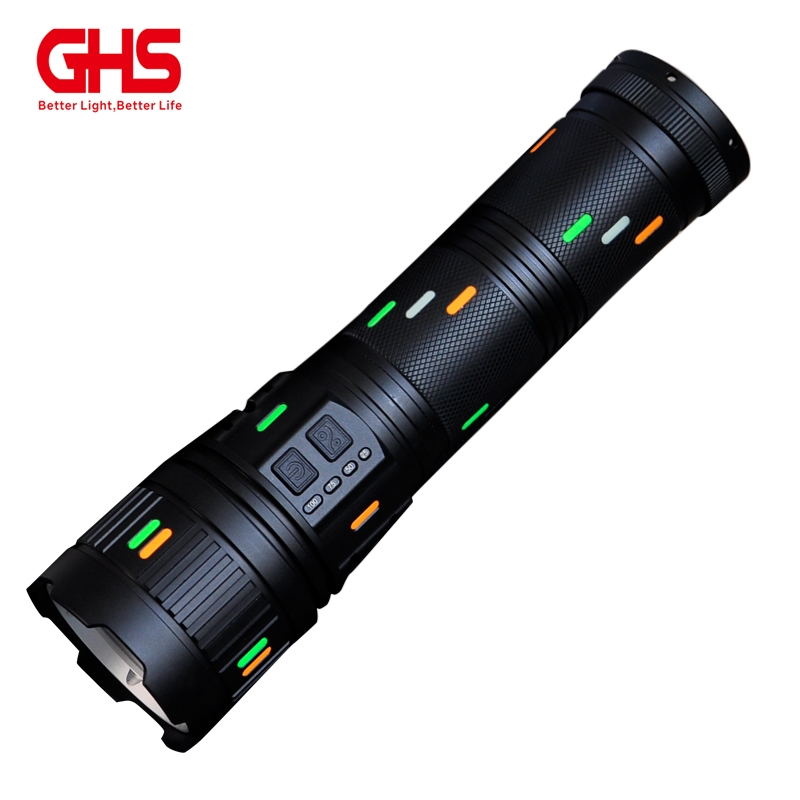
One of the main reasons buyers choose a rechargeable model is reduced operating hassle. Instead of buying and replacing primary cells, the flashlight can be recharged through a USB connection. The image set indicates Type-C charging for one version, while another version also suggests a rear USB port and even a phone-charging function. If a buyer needs emergency backup power in a small package, that dual-use idea can be attractive, though output details should always be verified before purchase.
Materials and Finish Options
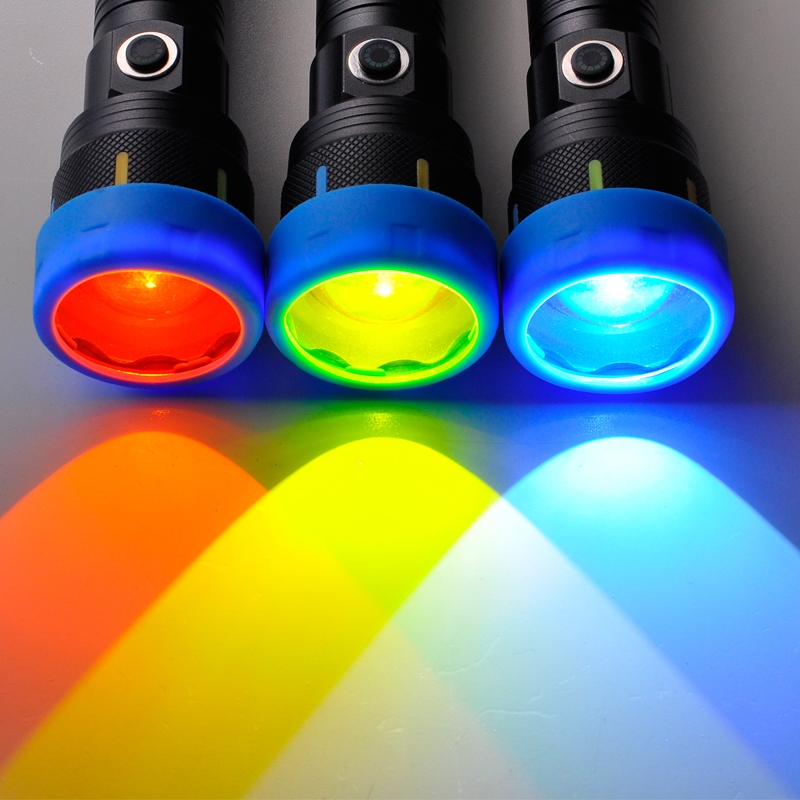
From the visible product photos, the housing appears to be a mix of black plastic or anodized metal-looking material with silver-toned trim. The body surface has a matte to semi-matte finish, which is practical for handheld use because it hides fingerprints better than a glossy shell and usually feels more secure in the hand. The head section appears to include a recessed lens with a reflective optic structure, and there are small decorative or indicator-style colored accents in some images.
If this product is sourced as a production item, the final material stack may vary by version. Some models in this category use an aluminum alloy body for heat dissipation and durability, while others use injection-molded outer shells with metal trim. Buyers should confirm whether they need a lighter plastic housing, a more rigid metal body, or a hybrid construction based on usage conditions.
Manufacturing and Assembly Approach
Products in this class are typically made through a combination of molding, machining, surface finishing, and electronic assembly. The body can be formed by injection molding or metal shaping, then finished with paint, coating, or anodizing-like treatment to achieve the black outer appearance. The head usually contains the LED optics, reflector or lens assembly, and focus mechanism. Internal circuitry supports charging, power regulation, and switch control.
The zoom system is especially important from a manufacturing standpoint because it requires consistent alignment between the lens, reflector, and moving parts. A stable fit helps maintain smooth rotation and predictable beam shape. The side switch, rear port, and any tail light or status indicator also need secure assembly so the flashlight remains usable in daily carry conditions.
Application Scenarios
This rechargeable flashlight fits many routine and backup use cases:
Camping and outdoor travel: useful for navigating tents, cooking areas, and walking paths after dark.
Household outages: provides immediate light when the power goes out.
Automotive use: convenient for glove box storage, tire checks, or roadside warnings.
Inspection and utility work: the adjustable beam helps users examine mechanical parts, cables, corners, and narrow spaces.
Security and patrol use: a focused beam can help identify distant objects or movement.
General daily carry: suitable for anyone who wants a rechargeable torch ready at home or in a bag.
For buyers comparing a standard flashlight with a zoom LED flashlight, the beam flexibility is often the deciding factor. In many tasks, the ability to widen or narrow the light improves usability more than raw size alone.
Quality Control Considerations
Because the visible data does not include exact performance numbers, buyers should evaluate the product with practical checkpoints rather than assumptions. Key areas include switch feel, beam alignment, charging port fit, smoothness of the zoom action, and overall body assembly. If the flashlight includes a phone-charging function, the charging output should be tested carefully to ensure it matches the intended emergency-use role.
Other important checks include lens clarity, bezel fit, internal rattle, and consistency between units. For commercial procurement, it is wise to request sample verification before placing a larger order, especially if the flashlight will be used in field work or packaged as part of an emergency kit.
Customization and Procurement Guidance
When working with an LED flashlight supplier, buyers usually focus on several customization points: housing color, branding placement, packaging design, charging port type, beam mode layout, and accessory inclusion. In this product family, the external shell and trim are the most visible branding areas. A logo on the body, custom carton design, or bundled cable can help position the flashlight for retail, corporate gifting, or utility supply.
Before finalizing a specification, decide how the flashlight will be used most often. If the main task is general household backup, a balanced flood beam may matter more than long throw. If the user needs path finding or inspection at distance, beam concentration becomes more important. If the flashlight will live in a car or emergency kit, charging convenience and compact storage may be higher priorities than decorative features.
Buyer Decision Factors
Several practical points should guide a purchase decision:
First, confirm the power source and charging method. USB Type-C can simplify daily use, but the exact battery size and charge time should be checked. Second, verify whether the beam zoom mechanism is smooth and stable, since that directly affects user experience. Third, determine whether any rear light or power bank claim is part of the final production specification or only shown in promotional imagery. Fourth, assess the shell material based on where the flashlight will be used. A more robust housing may be preferred for work sites, while a lighter body may be enough for household and travel use.
For B2B buyers, consistency matters as much as appearance. A product that looks strong in photos still needs stable assembly, reliable switching, and repeatable charging behavior across batches. That is why sample evaluation and clear specification confirmation are so important before mass ordering.
Conclusion and Next Step
This rechargeable LED flashlight combines a compact handheld shape, adjustable beam output, and USB-based convenience in a design that suits both everyday use and emergency preparedness. The visible features make it a practical option for camping, home backup, roadside tasks, and inspection work. If you are comparing models or sourcing for a retail program, a clear spec sheet and sample confirmation will help ensure the final product matches your intended use.
If you are looking for a rechargeable LED flashlight supply option or need a quote for a zoomable handheld torch, send your target specification, packaging needs, and quantity requirements so the product can be matched to your market and use case.